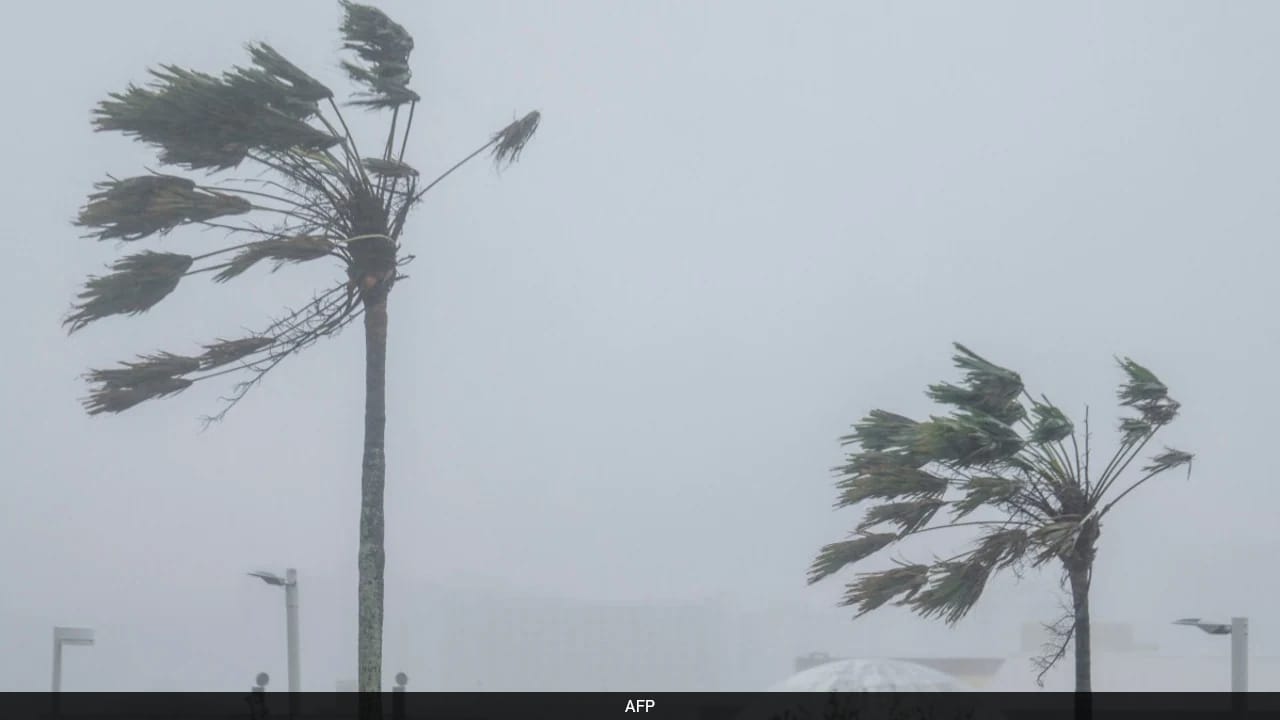
The silence of a forced evacuation does not sound like peace. It sounds like a refrigerator humming in an apartment where the milk will spoil before anyone returns. It sounds like the metallic click of a padlock snapping shut on a wooden door in Taizhou, or the frantic rustle of a blue plastic tarp being tied down over a rooftop in Wenzhou.
By Saturday evening, the eastern coast of China had become an eerie museum of locked doors.
More than 1.7 million human beings in Zhejiang province alone walked out of their homes, carrying whatever could fit into a single bag. In Shanghai, another 34,000 were pulled from high-risk zones. In Fujian, thousands more. They left because an invisible line on a satellite map had shifted, and because a monster the size of France was spinning toward them from the Pacific.
Typhoon Bavi did not care about the weekend plans of Wenzhou’s ten million residents. It did not care about the wet markets or the high-speed rail lines that stitch the coast together. It arrived with sustained winds of 144 kilometers per hour, a Category 1 buzzsaw fueled by warm ocean water, carrying enough moisture to drown entire agricultural districts.
When the state issued its first red alert for rainstorms of the year, it wasn't just a bureaucratic milestone. It was an eviction notice written by the sky.
Consider Huang Xinghuan, a 50-year-old resident of Wenzhou. His story represents the quiet calculus happening in a million households. He was out at a traditional wet market just hours before landfall, dodging scooter riders in plastic ponchos who splashed through the gathering puddles. He bought vegetables, some meat, and enough bottled water to last his family three days.
"I'm a little worried, but I think it'll be OK," Huang told reporters as the sky turned the color of bruised iron. "We've been through typhoons before. We'll get through it."
There is a profound, terrifying weight in that kind of resilience. It is the exhaustion of a population that knows exactly what a storm can do. Only days earlier, Typhoon Maysak had torn through the southern region of Guangxi, leaving at least 39 people dead and a trail of collapsed reservoir dams and ruined lives in its wake. The memory of the water was still fresh. The mud had not even finished drying on the floorboards of Hengzhou when Bavi began its march.
A storm of this scale changes the geometry of daily life long before the first wave hits the seawall.
First, the movement stops.
Hundreds of flights across East Asia vanish from departure boards. High-speed trains, usually roaring across the landscape at 300 kilometers per hour, sit dark and idle in protected depots. Ferry operations are suspended, leaving islands isolated in a churning gray sea. Schools close. Offices lock their doors.
Then come the guardians.
While nearly two million civilians moved inland to schools, gymnasiums, and temporary shelters, 20,000 firefighters moved toward the coast. They brought 329 rescue boats. They took up positions in towns like Shitang, where the coastal roads had already been cordoned off by emergency tape that whipped violently in the rising gale.
To understand the scale of what was averted, you have to look at what Bavi did before it even touched the mainland. In the Philippines, the storm did not even make landfall, yet its massive atmospheric pull dragged seasonal monsoon rains into a deadly frenzy. Landslides tore through mountain villages, killing at least 17 people. In Japan’s southern Sakishima islands, the wind was strong enough to snap utility poles like toothpicks, leaving thousands of homes in pitch darkness. In Taiwan, the storm skirted just north of the island, dumping torrential rain on Taipei and injuring dozens of motorcyclists who were thrown from their bikes by treacherous gusts.
By the time Bavi slammed into the coastal city of Taizhou late Saturday night, it was met not by a bustling economic hub, but by a ghost wall. The massive evacuation—one of the largest emergency movements of people in recent history—was a logistical triumph, but a human disruption of staggering proportions.
An evacuation on this scale is a temporary displacement of reality. It is families sleeping on thin mats in crowded shelters, listening to the rain hammer against corrugated metal roofs. It is elderly residents being carried down narrow stairwells by volunteers. It is the collective intake of a million breaths, waiting for the dawn to reveal what remains of the life they left behind.
As the typhoon moved inland toward the northwest, its eye began to collapse, its energy bleeding out over the mountains of eastern China. The winds slowed, the rain bands fractured, and the immediate terror began to fade into a long, soggy cleanup.
But the real story isn't the meteorology. It is the heavy, wet quiet that follows the wind. It is the sound of 1.7 million people turning their keys in the lock, stepping back across their thresholds, and looking up to see if the roof held.
Typhoon Bavi footage from East Asia
This footage captures the immense scale of Typhoon Bavi as it battered coastal areas and forced mass evacuations across the region.

.webp)