When an international consumer brand experiences a structural collapse in a major geographic market, the failure is rarely the result of a single isolated variable. It is the product of systemic friction between local socio-political dynamics and centralized corporate operational procedures. Starbucks Korea’s devastating operational crisis in May 2026—resulting in a sharp decline in revenue, the termination of chief executive Sohn Jeong-hyun, and a formal government boycott—serves as a primary case study in structural risk under management.
By launching a "Tank Day" promotion for large-capacity plastic tumblers on May 18, paired with the onomatopoeic slogan "put it on the table with a tak sound," the localized division activated two of South Korea’s most volatile historical traumas: the 1980 Gwangju Massacre, where Chun Doo-hwan’s military dictatorship deployed actual tanks to crush pro-democracy demonstrations, and the 1987 torture and killing of student activist Park Jong-chul, which authorities infamously attempted to cover up by claiming his heart stopped when an investigator slammed a table with a tak sound.
The operational failure cannot be written off as an unfortunate marketing coincidence. It reveals a critical breakdown in decentralized corporate governance, localized risk auditing, and automated workflow dependency.
The Structural Framework of Brand Equity Devaluation
To quantify the downside of this operational error, the crisis must be viewed through a standard Corporate Reputation Risk Matrix. When a brand asset collides with historical trauma, the speed of value destruction is accelerated by three distinct compounding forces.
+-------------------------------------------------------------------+
|               Historical Trauma Collision Matrix                 |
+-------------------------------------------------------------------+
| 1. High Temporal Synchronization (May 18 Anniversary)            |
|                                                                   |
| 2. High Linguistic Corellation ("Tank" & "Tak" Onomatopoeia)       |
|                                                                   |
| 3. Pre-existing Structural Vulnerability (Chaebol Ownership Bias) |
+-------------------------------------------------------------------+
                                 │
                                 ▼
                     Structural Brand Devaluation
The first force is temporal synchronization. Launching an asset campaign containing highly sensitive military nomenclature precisely on the anniversary of a state-sponsored civilian massacre guarantees maximum public exposure and negative emotional resonance. In South Korea, May 18 is not an abstract historical footnote; it is a legally recognized, heavily protected day of national mourning and democratic foundation.
The second force is linguistic correlation. A singular reference to a "tank" tumbler might have been parsed by a small fraction of the market as an operational misstep regarding product dimensions. However, the inclusion of the phrase "put it on the table with a tak sound" mathematically eliminated the probability of random coincidence in the view of the consumer base. By combining a visual military signifier (tank) with a specific audial cover-up phrase (tak), the campaign moved from a passive corporate oversight to what local civic groups designated as active historical mockery.
The third force is structural vulnerability. Starbucks Korea is operated via a localized corporate architecture: it is majority-owned (67.5%) by Emart, a subsidiary of the Shinsegae Group chaebol, with the remaining 32.5% held by the Singapore sovereign wealth fund (GIC). Shinsegae Group Chairman Chung Yong-jin has historically maintained a highly public, polarized social media persona, frequently broadcasting anti-progressive rhetoric. Consequently, when the marketing campaign went live, consumer psychology did not process the error as a mistake by low-level copywriters. Instead, the marketplace mapped the campaign directly to the perceived ideological biases of the parent organization's ultimate decision-maker.
Internal Operational Failures: The Blind Dependency Loop
An internal investigation conducted by Shinsegae Group revealed that the campaign was engineered by Starbucks Korea’s e-commerce team and achieved final approval via multiple management layers without a single internal objection. This systemic failure occurred along three internal operational axes:
- Automated Content Generation and AI Dependency: Marketing personnel admitted to utilizing artificial intelligence models to rapidly generate creative concepts, promotional slogans, and calendar pairings. The operational bottleneck occurred because the technology optimization function prioritized click-through velocity and high-impact product descriptors over localized cultural parameters. The software matched the physical attributes of a "tank" tumbler with high-volume search criteria, completely blind to the historical gravity of the target date.
- The Routine Sign-Off Bottleneck: The investigation revealed that out of the seven corporate layers who approved the digital campaign, multiple executives signed off via internal workflow tools without opening the attached design brief or reading the copywriting files. The internal protocol operated on a false assumption of upstream validity, meaning each manager assumed the prior layer had executed a meticulous review.
- The Omission of Specialized Legal and Compliance Review: In an effort to maximize structural speed-to-market for digital campaigns, the localized entity bypassed its traditional external risk and legal review pipeline. This created an echo chamber where internal velocity metrics overrode institutional safeguards.
Quantifying the Revenue Contraction and Ecosystem Impact
The financial and regulatory consequences of this operational blind spot highlight why cultural risk management must be prioritized on balance sheets. South Korea represents Starbucks' third-largest global marketplace by unit footprint, operating over 2,000 stores and generating 3.23 trillion won ($2.1 billion) in annual revenue. The downside vectors materialized instantly across multiple layers of the business ecosystem.
Immediate Revenue Metrics
Shinsegae Group executives reported a immediate and "very significant" contraction in retail store sales within 72 hours of the campaign launch. In regional hubs like Gwangju, which contains approximately 70 units, customer foot traffic reached historical lows as localized consumer boycotts achieved total cohesion.
Enterprise Valuation and Capital Markets
Shares in Shinsegae Group fell by over 2% within hours of the public markets processing the scale of the controversy. This drop represents a direct erasure of market capitalization driven entirely by corporate governance failures.
Public Sector Divestment
The operational damage extended directly to institutional revenue streams. Interior and Safety Minister Yoon Ho-jung declared a complete halt to the procurement of Starbucks goods, corporate catering, and digital gift vouchers across all state-level events and public programs. This institutional blacklisting was amplified by the Ministry of Defense, which canceled an active corporate partnership aimed at providing specialized beverage support to active-duty military personnel.
Institutional Mitigation Strategy
When an enterprise brand faces existential market rejection due to a historical trauma collision, standard public relations toolkits are ineffective. Deploying generic corporate messaging or attempting to smooth over structural errors with financial promotions causes further consumer alienation. Mitigation requires high-authority institutional restructuring.
          [Phase 1: Clear Executive Accountability]
             (Termination of CEO Sohn Jeong-hyun)
                            │
                            ▼
          [Phase 2: Definitive Institutional Apology]
        (Televised, Three-Bow Protocol by Chairman Chung)
                            │
                            ▼
        [Phase 3: Structural De-escalation of Frontline Risk]
      (Insulation of Floor Staff from Enterprise Backlash)
First, immediate accountability must be established at the highest operational tier to signal the gravity of the oversight to external stakeholders. Shinsegae Group executed this by dismissing Starbucks Korea Chief Executive Sohn Jeong-hyun within days of the initial escalation.
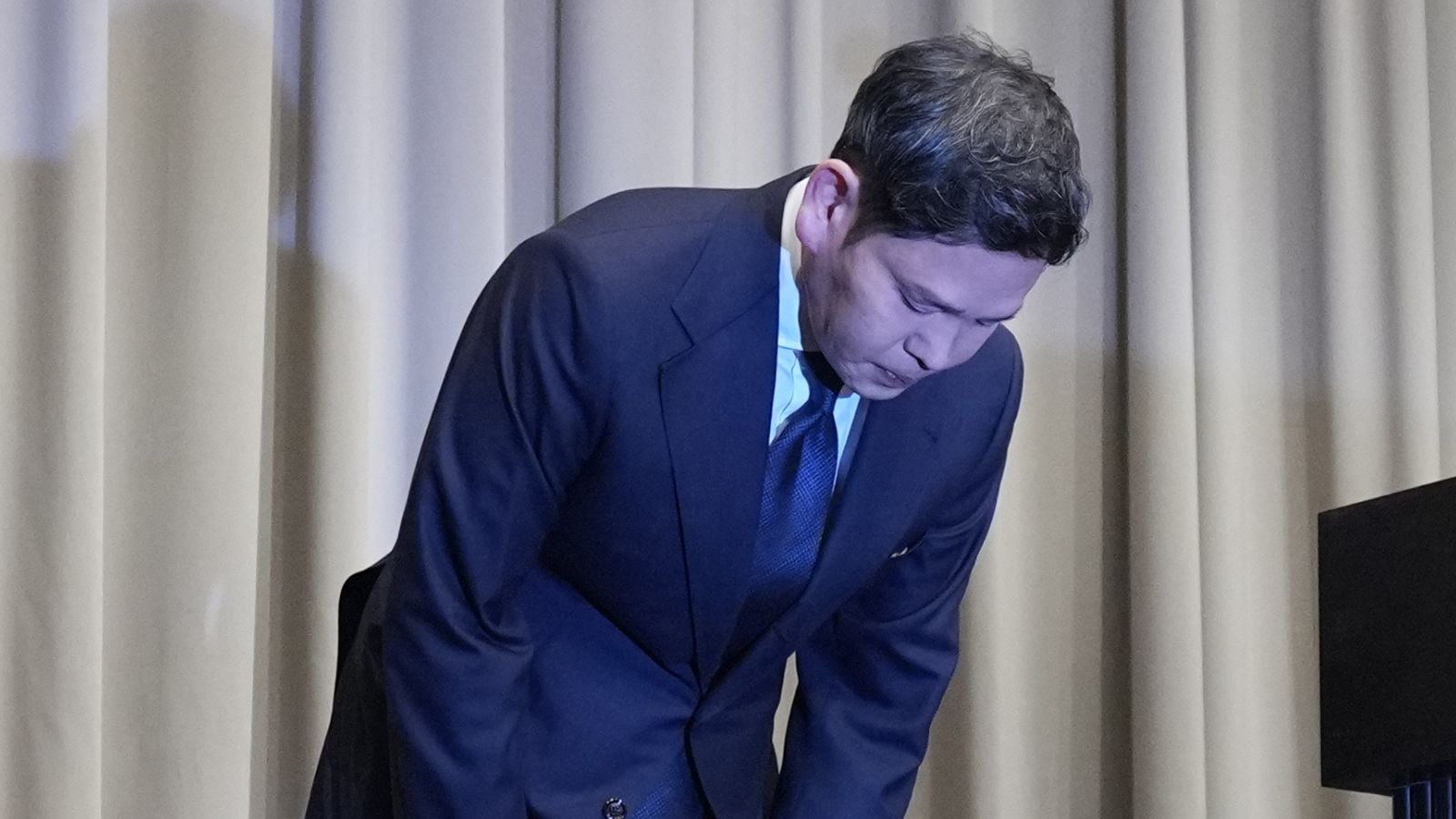
Second, the ultimate capital holder must issue an unconditional public apology that strips away all corporate defense mechanisms. Chairman Chung Yong-jin was forced to execute a televised statement involving a traditional, formal three-bow protocol to express institutional contrition to the families of historical victims.
Third, management must actively insulate frontline retail employees from corporate-level backlash. During high-velocity consumer boycotts, point-of-sale staff bear the brunt of public anger. Institutional statements must explicitly decouple corporate decision-making from floor-level operations to protect worker safety and minimize employee turnover.
The definitive forward horizon for Starbucks Korea relies on stripping automated marketing systems of unchecked execution autonomy. Moving forward, the enterprise must implement a hard code block within its content management pipelines: any campaign matching localized calendar dates with industrial, military, or historical descriptors must trigger an un-bypassable, manual human audit by an independent local compliance panel. Relying on velocity-focused internal metrics without rigorous historical and sociological vetting is a proven path toward market liquidation.
Starbucks sales tumble in South Korea over 'Tank Day' backlash
This broadcast provides direct corporate coverage of the financial contraction hitting the coffee chain, featuring live footage of the public apologies delivered by parent company leadership.