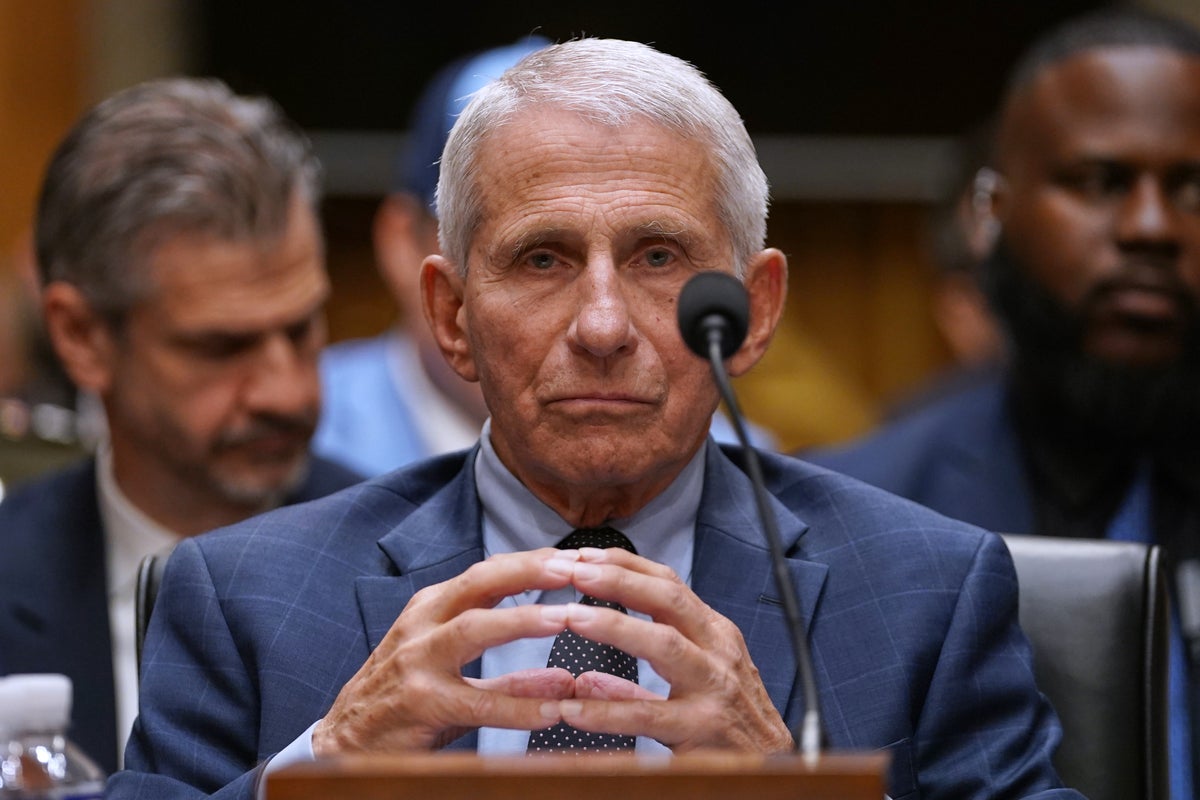
To understand the mechanics behind the move to hold former National Institute of Allergy and Infectious Diseases director Dr. Anthony Fauci in contempt of Congress, one must examine the intersection of legislative subpoena power, constitutional self-incrimination protections, and executive clemency. When a congressional committee initiates contempt proceedings following a witness's repeated invocation of the Fifth Amendment, the conflict moves beyond partisan rhetoric into constitutional law.
The strategy deployed by the Senate Homeland Security and Governmental Affairs Committee, chaired by Senator Rand Paul, relies on a specific reading of legal thresholds: whether a pre-emptive presidential pardon strips a witness of the right to remain silent. This dynamic creates a high-stakes stress test for congressional oversight limits.
The Dual Pillars of the Dispute
The confrontation centers on two competing legal interpretations regarding immunity and compulsory testimony.
- The Legislative Enforcement Pillar: Committees possess statutory authority under 2 U.S.C. Section 192 to compel testimony and documents. When a subpoenaed party refuses to comply without a legally recognized privilege, the committee can advance a contempt resolution. In this case, the committee bypassed a full chamber floor vote to expedite a direct referral to the Department of Justice.
- The Constitutional Protection Pillar: The Fifth Amendment protects individuals from being compelled in any criminal case to be a witness against themselves. The core friction point is whether that protection evaporates when an individual holds a broad federal pardon.
Proponents of the contempt resolution argue that because former President Joe Biden issued a sweeping pardon covering federal actions through January 2025, the legal exposure to federal criminal liability is neutralized. Under this theory, if zero criminal exposure remains at the federal level, the legal rationale for pleading the Fifth Amendment collapses.
Conversely, defense counsel maintains that the threat of state or local prosecution, combined with the potential for aggressive interpretations of new perjury or false statement allegations stemming from prior or current inquiries, preserves valid constitutional standing to withhold testimony. Furthermore, legal scholars note that a pardon does not automatically extinguish all risks, particularly if prosecutors investigate matters outside the temporal or jurisdictional scope of the executive order.
The Structural Mechanics of a Committee Referral
Rather than seeking a full Senate floor vote—which faces procedural hurdles and high threshold requirements to advance—the committee adopted a direct-referral mechanism. The procedural flow operates through specific steps:
- Subpoena Issuance: The committee issues a legally binding demand for appearance and testimony.
- Invocation of Privilege: The witness appears and declines to answer substantive queries, citing the Fifth Amendment over one hundred times.
- Resolution and Committee Vote: The panel drafts a contempt resolution detailing the refusal and legal arguments against the validity of the privilege, followed by a majority vote.
- Executive Branch Transmission: The committee transmits the resolution and accompanying legal brief directly to the U.S. Attorney’s Office for the District of Columbia.
This pathway shifts the burden of action to federal prosecutors. The Department of Justice maintains prosecutorial discretion over whether to present the contempt citation to a grand jury. Historically, executive branch prosecutors evaluate these referrals based on legal viability, statutory interpretation of "willful" default, and institutional precedent.
Institutional Implications and Precedent
The outcome of this referral establishes critical boundaries for future legislative oversight. If courts ultimately validate the committee's position that a pre-emptive pardon nullifies the right to plead the Fifth Amendment before Congress, executive branch officials granted clemency will face diminished legal protections when questioned by lawmakers.
Alternatively, if the judiciary upholds the invocation of silence despite a federal pardon—citing remaining state-level risks or the breadth of potential inquiries—it reinforces a robust shield for outgoing officials navigating hostile legislative reviews. The dispute highlights an enduring structural tension: the collision between Congress's constitutional duty to investigate executive administration and the individual's fundamental protection against self-incrimination.
Refer the committee resolution and legal brief directly to the U.S. Attorney’s Office for the District of Columbia to initiate prosecutorial review of the statutory contempt charge.