The traditional television casting pipeline operates on an industrialized matrix of archetype matching, standardized physical validation, and risk mitigation. When showrunner Elizabeth Merriweather engineered the character of Alden for the Hulu series Furious explicitly around comedian and disability advocate Steve Way, she bypassed conventional network testing models entirely. This operational pivot signals a structural shift in how television creators source authenticity, manage character-actor integration, and leverage lived experience to drive narrative tension. Deconstructing the mechanics behind Way's casting and performance reveals a blueprint for dismantling lazy writer-room tropes and restructuring how physical disability functions within dramatic serials.
The Tripartite Model of Character Synthesis
Television writing usually treats disability through a reductive lens, assigning characters either saintly martyrdom or bitter cynicism. The inclusion of Alden in Furious avoids this binary through a tripartite writing framework that merges Way’s actual biography, precise physical comedy, and dark-narrative counter-programming.
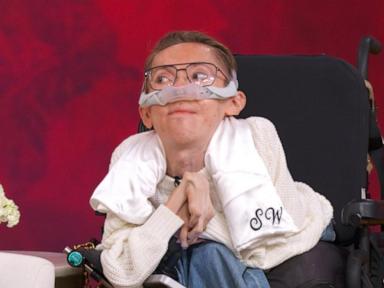
- The Biography-Autonomy Loop: Unlike standard casting where an actor adopts a condition they do not possess, Way brings lived realities of muscular dystrophy directly to the script. Rather than forcing a non-disabled actor to simulate vulnerability, the writers extracted specific logistical realities from Way, such as precise wheelchair maneuvering and transfer mechanics, building the character's physical language from the ground up.
- The Levity Coefficient: Dark serial-killer narratives risk narrative saturation through relentless grimness. Alden introduces a calculated structural release valve. By injecting rapid-fire stand-up timing into high-stakes interrogation scenes, the production creates a tonal dissonance that highlights the absurdity of the criminal plot without breaking dramatic suspension of disbelief.
- The Power Asymmetry Inversion: The core relationship between Alden and his home care aide—who is secretly a serial killer—inverts traditional dependency dynamics. Alden relies entirely on her for physical survival, yet his emotional unpretentiousness creates an unshakeable psychological safe harbor that confounds federal investigators.
The Economic and Operational Impact on Production Design
Integrating a disabled actor with specialized physical needs requires more than progressive casting ideology; it demands an overhaul of standard production logistics. Television sets are historically unfriendly to motorized mobility equipment, often treating accessibility as an afterthought or a compliance burden.
When production teams restructure call sheets, transport schedules, and set architecture to accommodate an actor like Way, operational efficiency paradoxically increases. Crews must pre-plan spatial blocking with mathematical precision. This constraint eliminates wasteful, improvised reshoots and forces directors to map camera angles with economic rigor.
Furthermore, the utilization of behind-the-scenes digital workflows and emerging assistive technologies on productions like Furious demonstrates that physical accommodation scales production capability rather than hindering it. The economic upside is direct: authenticity reduces the cost of visual effects simulation, while distinct character mechanics elevate audience retention metrics across streaming platforms.
Internalized Ableism as a Narrative Driver
Standard television writing relies on external conflict—gunfights, ticking clocks, legal subpoenas. Furious leverages a more insidious internal mechanism: internalized ableism as an engine for plot progression.
When federal agents attempt to turn Alden against his caregiver by revealing her murderous acts, the dramatic friction does not stem merely from romantic loyalty. It taps directly into the psychological toll of societal conditioning. Alden confronts the agonizing internal calculus familiar to many disabled individuals: the suspicion that affection is conditional, that caregiving implies debt, and that vulnerability invites exploitation.
Societal Preconditioning -> Internalized Guilt -> Asymmetric Dependency -> Narrative Vulnerability
By framing Alden's refusal to cooperate with the FBI not as simple ignorance, but as a clear-eyed rejection of conventional power structures, the narrative establishes a sophisticated moral ambiguity. Alden recognizes that the standard social contract has already failed him; therefore, traditional metrics of criminality become secondary to the preservation of genuine human unconditional regard.
Strategic Deployment of Talent Disruption
To replicate this casting efficacy across the broader media landscape, showrunners must abandon superficial diversity checklists. True narrative disruption requires treating specialized lived experience not as a constraint to write around, but as the foundational architecture of the character. Writers' rooms must integrate consulting actors during the conceptual phase rather than the casting phase.
Future development pipelines should establish direct feedback loops between performers with disabilities and showrunners to audit scripts for patronizing tropes before production commences. Treat physical reality as an active narrative variable rather than passive set decoration, and the resulting drama will consistently outclass sanitized, algorithmic storytelling.
.jpeg)