Modern electricity systems operate on a knife-edge of instantaneous supply and demand equilibrium. When a national transmission operator warns of potential emergency power cuts, the public discourse typically defaults to alarmism or simplistic finger-pointing at fuel shortages. A rigorous examination of grid stability requires stripping away political rhetoric and examining the physical mechanics, economic cost functions, and structural vulnerabilities that govern high-voltage networks.
Great Britain faces a distinct convergence of capacity margin contraction, reliance on volatile interconnector flows, and the operational inertia loss associated with the retirement of synchronous thermal generation. Understanding why emergency load shedding moves from a theoretical contingency to a baseline risk requires mapping three interdependent pillars: generation adequacy, network constraint management, and reserve response time.
The Trilemma of Capacity Adequacy
Grid stability begins with a simple accounting identity: generation plus imports must equal demand plus losses at every microsecond. When this identity fails, frequency drops below the operational threshold of 50.0 Hertz, risking cascading protection trips and widespread blackout events.
The primary driver of structural tightness in the British grid is the retirement trajectory of baseload coal and ageing nuclear assets, paired with an accelerating buildout of intermittent renewable generation. Wind and solar introduce variable capacity factors. While aggregate annual energy production from renewables continues to scale, peak demand events frequently coincide with periods of low wind generation and dark winter anticyclones.
National Grid ESO manages this through the Capacity Market, an auction mechanism designed to procure sufficient reliable capacity years in advance. However, the system encounters friction when older thermal plants decommission faster than new flexible gas peaking plants or long-duration storage assets can interconnect. The resulting margin compression leaves little room for error when multiple asset classes experience simultaneous forced outages.
The Cost Function of Low Margins
Maintaining security of supply incurs a direct economic cost. To prevent emergency interventions, system operators rely on balancing mechanisms to pay generators to ramp up or curtail demand. As available reserve margins narrow, the marginal cost of procuring flexibility spikes exponentially.
When balancing market costs escalate beyond political or budgetary thresholds, the operator must transition from market-based balancing to emergency demand-side response protocols. These protocols are not designed to optimize for cost efficiency; they are blunt instruments engineered to preserve physical asset integrity before frequency collapse triggers black-start procedures.
Network Constraints and the Interconnector Variable
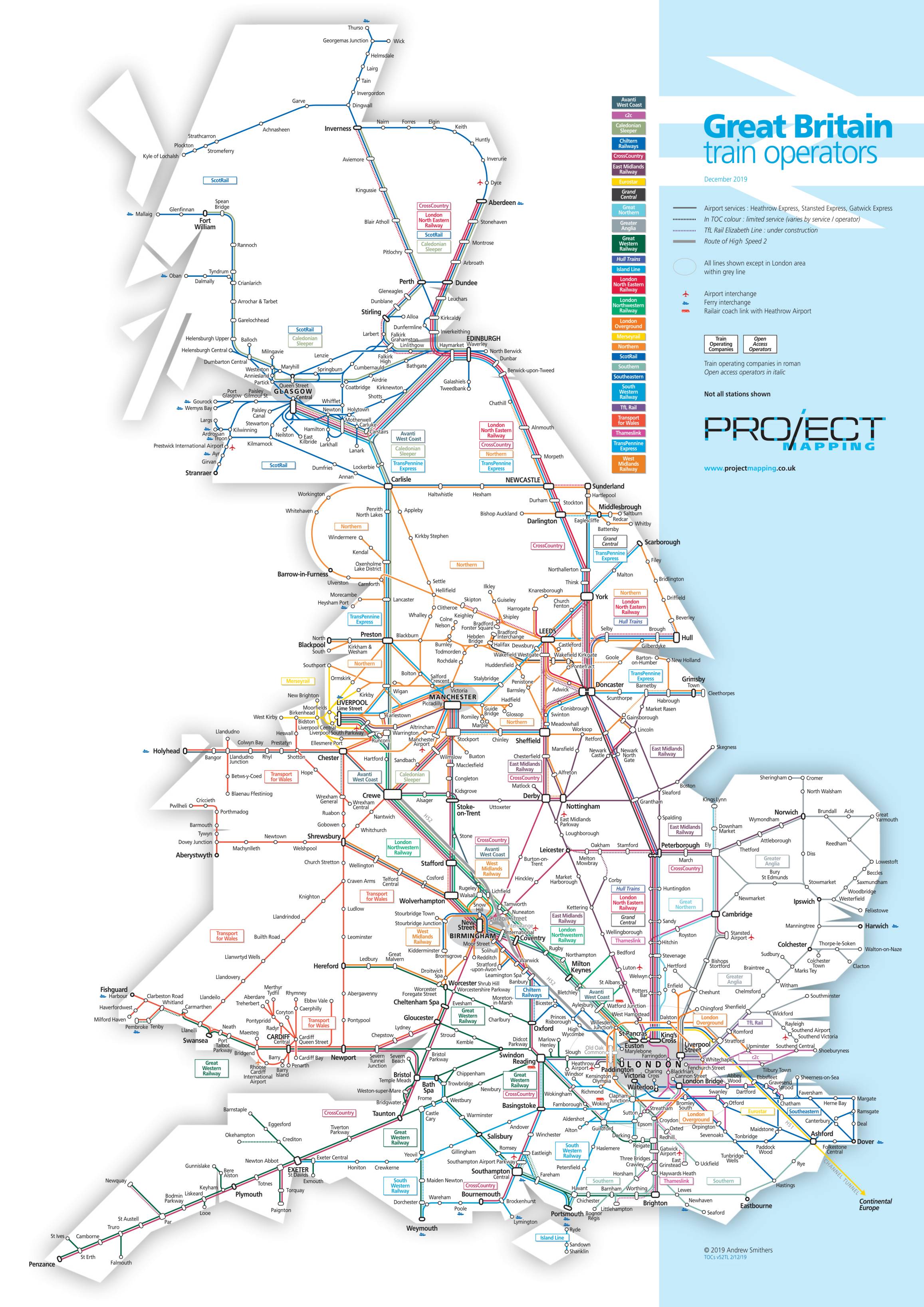
Generation adequacy alone does not dictate supply security. Electrons must travel from generation nodes to consumption centers through high-voltage transmission lines. Great Britain exhibits a geographical mismatch: abundant offshore wind generation is concentrated in the north and off the eastern coast of Scotland, while massive demand centers cluster in the Midlands and the south.
This spatial distribution creates severe transmission bottlenecks. When power flows from north to south exceed thermal or voltage limits on the boundary lines, the system operator must pay northern generators to turn down while simultaneously paying southern generators to turn up. This practice, known as constraint management, inflates consumer bills and underscores the physical limits of the existing wire infrastructure.
To mitigate internal deficits, Great Britain relies heavily on undersea interconnectors linking the national grid to continental Europe and Scandinavia. These cables allow import arbitrage during tight domestic periods.
The Fragility of Imported Power
Interconnectors introduce external dependencies. During periods of continent-wide cold snaps or low wind output across Northern Europe, neighboring nations face concurrent supply squeezes. Under European market coupling rules, power flows to the highest-priced zone.
If British pricing spikes to attract emergency imports, it functions as designed, but only if continental surplus exists. When neighboring systems experience simultaneous capacity constraints, interconnector flows can reverse or drop to zero precisely when domestic demand reaches its peak. Relying on cross-border transmission during a systemic European shortage transforms an international asset into a structural vulnerability.
The Mechanics of Emergency Load Shedding
When spinning reserves, demand-side response programs, and emergency interconnector capacity are exhausted, the operator implements the Demand Side Disconnection procedure, formally executed through predefined rotas. This mechanism is structured hierarchically to protect critical national infrastructure while distributing the load-shedding burden across regional distribution network operators.
The process follows a deterministic sequence:
- Voluntary Commercial Curtailment: Large industrial users are financially incentivized to suspend operations via the Demand Side Balancing Reserve.
- Voltage Reduction: Operators deliberately lower system voltage by a controlled percentage, typically 3 or 6 percent, reducing instantaneous demand from resistive loads without interrupting supply.
- Rotational Disconnection: Controlled, timed block outages are implemented across specific feeder circuits, rotating through designated geographic zones to prevent localized equipment thermal damage.
The economic and social friction of rotational load shedding is catastrophic. Unlike wholesale price spikes, physical disconnection imposes unpriced rationing on commercial entities, halting manufacturing lines, disrupting transport signaling, and straining municipal services.
Systemic Vulnerabilities and Operating Blind Spots
A frequent misconception is that power cuts are binary events caused purely by a lack of total megawatt-hours. In practice, operational instability is frequently driven by inertia deficits.
Traditional fossil and nuclear plants rely on massive spinning steam turbines. These rotating masses provide inherent kinetic energy synchronization to the grid, automatically resisting sudden frequency fluctuations. As wind and solar generation—interfaced through power electronics rather than direct spinning mass—replace thermal plants, system inertia drops.
Lower inertia means frequency changes occur far more rapidly following a sudden generation trip. The time window for automated protection systems and rapid response batteries to arrest a frequency drop shrinks from seconds to milliseconds. If response latency exceeds this critical window, emergency separation occurs automatically, leading to unplanned outages.
Forecasting Uncertainty
The predictability of demand and supply profiles has degraded. Decentralized rooftop solar installations and behind-the-meter battery storage obscure underlying demand visibility from the central operator.
Furthermore, extreme weather events driven by shifting climatic patterns increase the frequency of simultaneous asset stress, such as icing on wind turbine blades paired with low atmospheric pressure zones that suppress wind speeds over vast geographic areas. Traditional statistical models trained on historical weather analogues struggle to price tail-risk probability accurately, leaving operators vulnerable to unmodeled compound failures.
Strategic Execution for Grid Resilience
Mitigating the structural risk of emergency power cuts requires targeted capital allocation and regulatory reform rather than short-term appeals for consumer conservation. The pathway to long-term stability demands structural transformation across three distinct vectors:
- Accelerate Transmission Infrastructure Buildout: Streamline the planning and permitting frameworks for high-voltage direct current overhead and underground corridors to unlock northern generation capacity and eliminate regional bottlenecks.
- Scale Long-Duration Energy Storage: Deploy utility-scale pumped hydro and chemical flow batteries capable of discharging over multi-day periods to buffer against prolonged renewable droughts.
- Mandate Synthetic Inertia: Require all new non-synchronous generation and grid-forming inverter assets to provide fast frequency response and synthetic inertia capabilities as a baseline condition of grid connection.
The resilience of an advanced economy depends on the absolute reliability of its energy vector. Treating emergency power cuts as temporary anomalies ignores the underlying physical and economic transitions reshaping the grid. Only through disciplined engineering and aggressive infrastructure modernization can structural equilibrium be restored.
:max_bytes(150000):strip_icc()/ar-American-Cheese-taste-test-horizon-4x3-54cc339550cd44b9a818c17bdfd5428d.jpg)