The EPA is sitting on a ticking time bomb and they know it. Specifically, their own watchdog—the Office of Inspector General (OIG)—just dropped a report that should make anyone living within ten miles of a Superfund site lose sleep. We aren't just talking about a few leaky barrels in a field. We're talking about the most contaminated, hazardous land in the United States, and right now, hundreds of these sites are completely unprepared for the reality of extreme weather.
Floods, wildfires, and rising sea levels aren't "future threats" anymore. They're happening. Yet, the GAO and now the EPA's own OIG have found that the agency is lagging behind in securing these zones. If you think the government has a handle on this, you're mistaken. The data shows a massive gap between the risks we face and the actual boots-on-the-ground protection at these high-risk locations. Also making headlines in this space: The Kinetic Deficit Dynamics of Pakistan Afghanistan Cross Border Conflict.
The Superfund sites drowning in red tape
Superfund sites are essentially the "Blacklist" of environmental disasters. These are places where industrial waste, mining byproducts, or chemical spills have rendered the land so toxic it requires federal intervention. Think Love Canal or the Gowanus Canal. The problem is that many of these sites were designed and "remediated" based on weather patterns from thirty years ago.
According to the recent OIG findings, about 60% of non-federal Superfund sites are located in areas that could be hit by wildfires or different types of flooding. That is over 900 sites. Most of these locations don't have updated management plans that account for a 100-year flood happening every five years. It's a systemic failure to update risk profiles. Additional information on this are detailed by Al Jazeera.
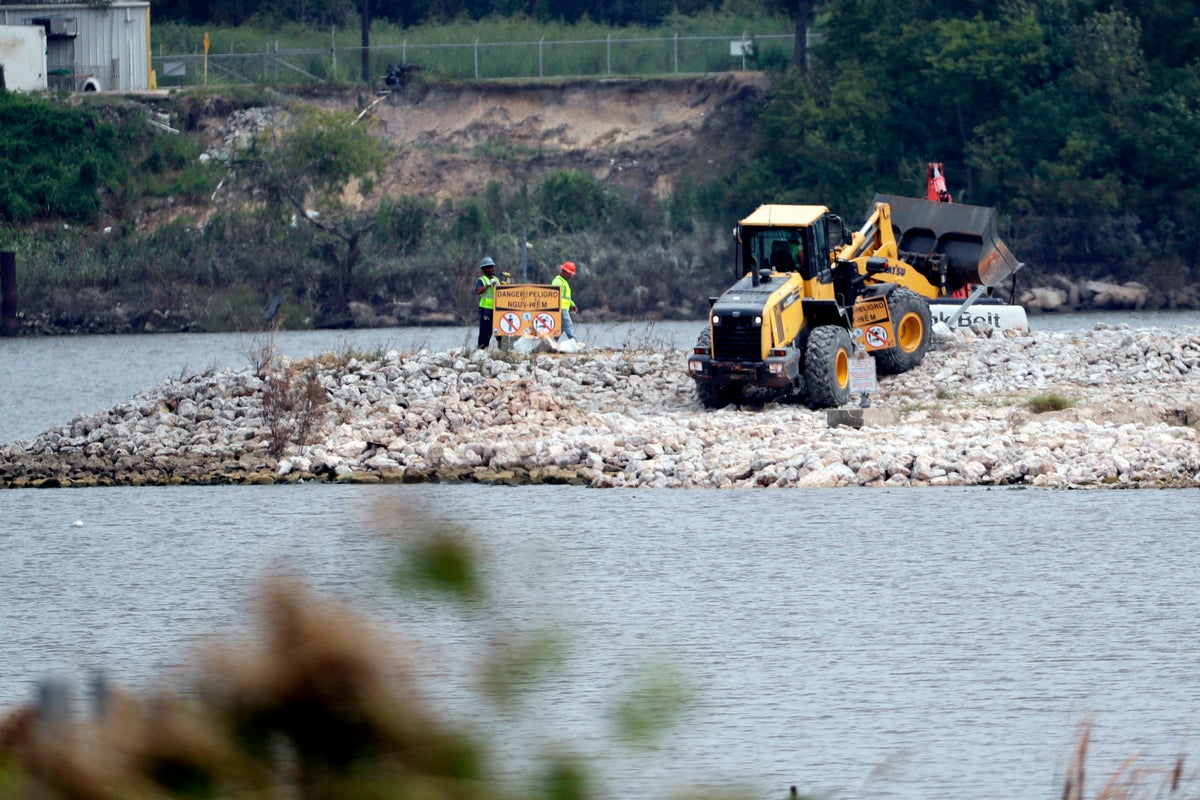
The EPA likes to talk about "resilience." It's a nice word. But when a hurricane hits a site filled with lead, arsenic, and PFAS, that resilience needs to be physical, not just on a spreadsheet. We saw this during Hurricane Harvey in 2017. Multiple Superfund sites were flooded, and in some cases, toxic sludge actually migrated into residential areas. We're repeating those mistakes because the bureaucracy moves slower than the rising water.
Why fire and water are a lethal combo for toxins
Fire and water act as transport mechanisms for poison. It's that simple. When a site burns, the chemicals don't just vanish. They become airborne or they leach into the soil in a more volatile state. When a site floods, the water carries heavy metals and solvents directly into the groundwater or the local river system.
The OIG report pointed out that the EPA hasn't even consistently integrated climate data into their long-term site reviews. Every five years, the EPA is supposed to check in on these sites to make sure the "remedy" (like a clay cap over toxic dirt) is still working. But if you aren't looking at the new wildfire maps or the updated coastal erosion data, your check-up is basically worthless.
- Wildfire risk: Heat can crack the protective caps designed to keep toxins buried.
- Flooding: High-velocity water can wash away the soil covers, exposing raw waste.
- Sea level rise: Saltwater is corrosive. It eats through the "permanent" barriers faster than freshwater.
If you're a local official in a town with one of these sites, you're likely working with outdated info. The EPA hasn't been transparent enough about which specific sites are at the highest risk right now. They have the maps. They have the data. They just haven't finished the homework of applying it to every single site.
The budget gap is killing progress
Money is always the excuse. Cleaning up a single Superfund site can cost hundreds of millions of dollars. The Infrastructure Investment and Jobs Act pumped about $3.5 billion into the program, which sounds like a lot until you realize there are over 1,300 sites on the National Priorities List.
The OIG report is a wake-up call because it highlights that even with new funding, the EPA isn't prioritizing "climate-informed" cleanups. They're often just doing the same old thing. That's a waste of taxpayer money. If you spend $50 million to cap a site and it washes away in a storm three years later, you didn't save money. You just threw it into a toxic swamp.
We also need to talk about the "orphaned" sites. These are places where the company responsible for the mess went bankrupt decades ago. The public picks up the tab. Because there's no private entity to sue, these sites often sit at the bottom of the priority list. Unfortunately, many of these orphaned sites are in low-income communities that are already disproportionately affected by pollution.
What happens when the sensors go dark
One of the most damning parts of recent oversight reports is the lack of real-time monitoring. Many Superfund sites don't have functional, weather-resistant sensors to detect leaks during a disaster. If a flood hits at 2 AM, we often don't know the chemicals are moving until someone spots a sheen on the water the next morning.
By then, it's too late. The damage is done.
The EPA needs to stop treating climate change like a "political" issue and start treating it like a structural engineering problem. You wouldn't build a bridge without checking the wind speeds. You shouldn't "clean" a toxic waste dump without checking the flood plains for 2050.
The OIG recommended that the EPA clarify its requirements for including climate change in its risk assessments. The agency agreed, but "agreeing" isn't the same as doing. We need to see these changes in the Record of Decision (ROD) for every new site.
How to check if your backyard is toxic
Most people have no idea they live near a Superfund site. They're often hidden behind chain-link fences or disguised as "vacant lots." You need to be proactive because the government isn't going to send a flyer to your door.
Go to the EPA's Cleanups in My Community map. Type in your zip code. Don't just look for the sites on the list; look at their status. Is the cleanup "complete"? Does it have "institutional controls"?
If a site near you is listed, look for the "Five-Year Review" documents. If the report doesn't mention "climate resiliency," "flood risk," or "wildfire mitigation," start asking questions. Call your local representative. Demand to know if the site's safety plan was updated using data from this decade, not the 1990s.
Community pressure is often the only thing that moves these projects up the priority list. The OIG report gives you the ammunition you need to prove that the current "safety" measures are outdated. Don't wait for the next big storm to find out if your local waste site is actually secure. The EPA's own watchdogs are telling you it probably isn't.
Check your local flood maps against the EPA's site boundaries. If they overlap and there's no mention of a sea wall or reinforced capping, that's a red flag. Start attending the Community Advisory Group (CAG) meetings if your site has one. If it doesn't, demand one. Toxic waste is a permanent problem, and it requires a permanent, modern solution.