Everyone in Washington is hyperventilating over a subpoena.
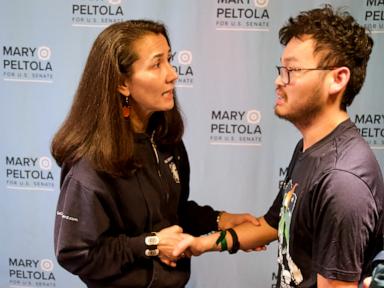
The mainstream press wants you to believe the story in Alaska is a simple, binary morality play. On one side, you have Rep. Mary Peltola, the folksy, bipartisan Democrat denying she knew a thing about a shadowy effort to prop up a conservative "spoiler" candidate. On the other, you have the Department of Justice, kicking down doors and escalating a campaign finance investigation into dark money groups that allegedly funneled cash to split the Republican vote. For another view, consider: this related article.
It is a neat, tidy narrative. It fits into a cable news chyron. And it completely misses the point.
If you spend all your time obsessing over whether Mary Peltola personally signed off on a check or read a specific text message, you are falling for the oldest sleight of hand in political journalism. The real story isn't about one congresswoman's plausible deniability. It is about a massive structural flaw in how modern political campaigns operate—and a fatal misunderstanding of how Alaska's ranked-choice voting system actually works. Further reporting on this trend has been shared by The New York Times.
The Myth of the Clueless Candidate
Let’s dispense with the fairy tales first.
In modern federal elections, candidates are legally barred from coordinating with independent expenditure groups, commonly known as Super PACs. When a scandal like the Alaska spoiler investigation breaks—specifically surrounding allegations that operatives propped up a conservative candidate like Eric Hafner or similar third-party actors to siphon votes away from Republican challengers—the candidate's first move is always identical. They look into the camera, widen their eyes, and say, "I had no idea."
Legally, Peltola is almost certainly telling the truth. Under Federal Election Commission (FEC) rules, specifically 11 CFR § 109.21, coordination requires a specific three-prong test involving payment, conduct, and content. Political consultants are paid millions of dollars precisely because they know how to dance right up to that legal line without crossing it. They don't need to tell the candidate. In fact, keeping the candidate completely in the dark is the entire point of the architecture.
I have sat in war rooms from D.C. to Anchorage. I have watched consultants spend seven figures on "ratfucking"—the industry's blunt term for tactical sabotage—while the candidate was three thousand miles away shaking hands at a fish fry. When the DOJ subpoenas hit, the candidate can pass a polygraph test while their consultants hide behind attorney-client privilege and shell LLCs.
The press treats Peltola's denial as the climax of the story. In reality, it is just the standard operating procedure of the American campaign-industrial complex.
The Ranked-Choice Voting Illusion
Here is where the lazy consensus truly falls apart.
Pundits keep calling this a "spoiler candidate" scandal. By definition, a spoiler is a non-winning candidate whose presence on the ballot draws votes away from a major candidate with a similar ideology, thereby causing that major candidate to lose. Think Ralph Nader in 2000. Think Ross Perot in 1992.
There is just one problem. Alaska uses Ranked-Choice Voting (RCV).
Under Ballot Measure 2, adopted by Alaska voters in 2020, the state uses a top-four open primary followed by an instant-runoff general election. In theory, RCV makes the "spoiler effect" mathematically impossible.
Let's trace the mechanics:
- A conservative voter walks into the booth.
- They hate the establishment Republican, Nick Begich, or they are annoyed by Nancy Dahlstrom.
- They rank a fringe conservative—the alleged "spoiler"—as their number one choice.
- They rank the mainstream Republican as their number two choice.
- When the fringe candidate finishes in last place, they are eliminated, and their votes are instantly transferred to the voters' second choice.
Nobody's vote is wasted. No spoiler spoils anything. That is the entire sales pitch of election reformers like FairVote and the architects of Alaska's system.
So why on earth would Democratic operatives allegedly risk federal prison time to prop up a conservative candidate in a system where spoilers supposedly don't work?
Because the reformers lied to you about human psychology.
How Dark Money Hacks Instant Runoffs
Ranked-choice voting only eliminates the spoiler effect if voters actually rank multiple candidates. When voters "bullet vote"—meaning they select one candidate and leave the rest of the ballot blank—the instant runoff collapses back into a standard plurality election.
Even more critically, RCV in Alaska begins with a top-four open primary.
Think about the game theory here. In a top-four primary, all candidates run on one ballot. The top four vote-getters advance to the November general election, regardless of party. If Democratic operatives can artificially inflate a fringe conservative candidate just enough to push them into the top four, they achieve two devastating tactical victories at once:
- Ballot Crowding: A fringe candidate taking up one of the four slots might push out a viable, well-funded Republican challenger before the general election even begins.
- Narrative Poisoning: Even if the fringe candidate makes it to November and finishes fourth, their presence on the debate stage and in mailers creates a vector to attack the mainstream Republican from the right. If those attacks convince hardline conservatives that the mainstream Republican is a "RINO" traitor, those voters won't rank the mainstream Republican second. They will leave their second choice blank.
When those ballots are exhausted, Mary Peltola doesn't need 50 percent of all Alaskans to win. She just needs 50 percent of the remaining active ballots.
That is not a spoiler strategy. That is an exhaustion strategy. And the DOJ isn't investigating it because someone ran a bad candidate; they are investigating it because dark money groups allegedly used illegal straw donors, hidden coordination, or fraudulent residency filings to manipulate who got onto that top-four ballot in the first place.
What Everyone Gets Wrong About DOJ Escalation
Whenever the Department of Justice's Public Integrity Section steps into a congressional race, partisan media immediately screams about "weaponization" or "smoking guns." Both sides are misreading the room.
When the DOJ escalates an investigation into campaign finance violations, they are rarely hunting the candidate. Candidates are notoriously bad targets for white-collar prosecutors because proving mens rea—criminal intent—is nearly impossible when the candidate has a firewall of consultants insulating them from the mechanics of the campaign.
Instead, federal prosecutors use the threat of felony charges under the Federal Election Campaign Act (FECA)—specifically 52 U.S.C. § 30122, which prohibits making contributions in the name of another—to squeeze the middlemen.
Consider how a typical dark money scheme unravels. An operative wants to fund a third-party candidate to mess with the opposition's primary. If the Super PAC writes a check directly to the candidate, it's public record, and the tactic is dead on arrival. So, the operative routes money through a 501(c)(4) "social welfare" organization, which doesn't have to disclose its donors. That group then pays a vendor, who mysteriously ends up working for the fringe candidate, or funnels cash to individuals to max out individual donations to the fringe campaign.
It is sloppy. It leaves a digital paper trail of wire transfers, encrypted Signal messages, and invoice discrepancies.
When the DOJ issues subpoenas to vendors and state election officials, they aren't trying to prove Mary Peltola is a criminal mastermind. They are trying to flip a mid-level consultant who doesn't want to spend three years in a federal correctional facility for wire fraud and conspiracy to defraud the United States.
The Uncomfortable Truth About "Clean" Campaigns
To be completely candid, my view on this—that the structural design of Super PACs and RCV practically invites this kind of shadow warfare—has a major blind spot. If you dismantle the firewall between candidates and outside groups to ensure accountability, you risk returning to the pre-Citizens United era of direct corporate and union influence, or worse, crushing legitimate grassroots independent advocacy under the weight of federal compliance laws.
There is no clean regulatory fix that stops political operatives from acting like mercenaries.
Both parties do this. In 2022, Democratic groups spent over $53 million meddling in Republican primaries across the country, boosting far-right election deniers because they believed those candidates would be easier to beat in November. In 2020, Republican operatives funneled millions into Green Party ballot access efforts in swing states like Wisconsin and Pennsylvania to siphon votes from Joe Biden.
The practice is entirely legal as long as the money is disclosed properly and there is no coordination with the opposing campaign.
The Alaska scandal only crossed into criminal territory because someone allegedly got greedy, cut corners on disclosure laws, or cooked up a scheme involving out-of-state actors to game the filing process. In Washington, the real crime is rarely the dirty trick itself; it is failing to file the proper paperwork for the dirty trick.
Stop Asking If She Knew
If you want to understand what happens next in Alaska, stop asking whether Mary Peltola knew about the spoiler candidate.
Ask instead why a political system designed to reward moderation and consensus has instead produced a multi-million-dollar shadow industry dedicated to ballot manipulation.
Ranked-choice voting was supposed to force politicians to appeal to the center, to build broad coalitions, and to earn second-choice votes from their opponents' supporters. Instead, political consultants treated it like a new video game with an unpatched exploit. They realized that if they couldn't win the center, they could simply engineer the ballot to exhaust the opposition's base.
Look at the real casualties here:
- Voter Trust: Every time a DOJ subpoena drops, regular Alaskans become more convinced that their top-four primary is rigged by Lower 48 billionaires.
- Systemic Survival: Repeal efforts against Alaska's ranked-choice voting system have already come within a razor's edge of passing. A high-profile federal indictment involving ballot manipulation gives repeal advocates all the ammunition they need to kill RCV nationwide.
- Accountability: As long as the "consultant firewall" holds, politicians can reap the electoral benefits of shadow campaigns while claiming total ignorance when the feds arrive.
The Justice Department will eventually hand down its indictments. Some obscure operative, a shell company treasurer, or a desperate fringe candidate will take the fall. They will pay a fine, plead guilty to a process crime, and fade into obscurity.
Meanwhile, the consultants who architected the strategy will quietly rebrand their LLCs, pack their bags, and head to the next battleground state to run the exact same play all over again.
Peltola didn't need to know a thing. The machine works better when she doesn't.