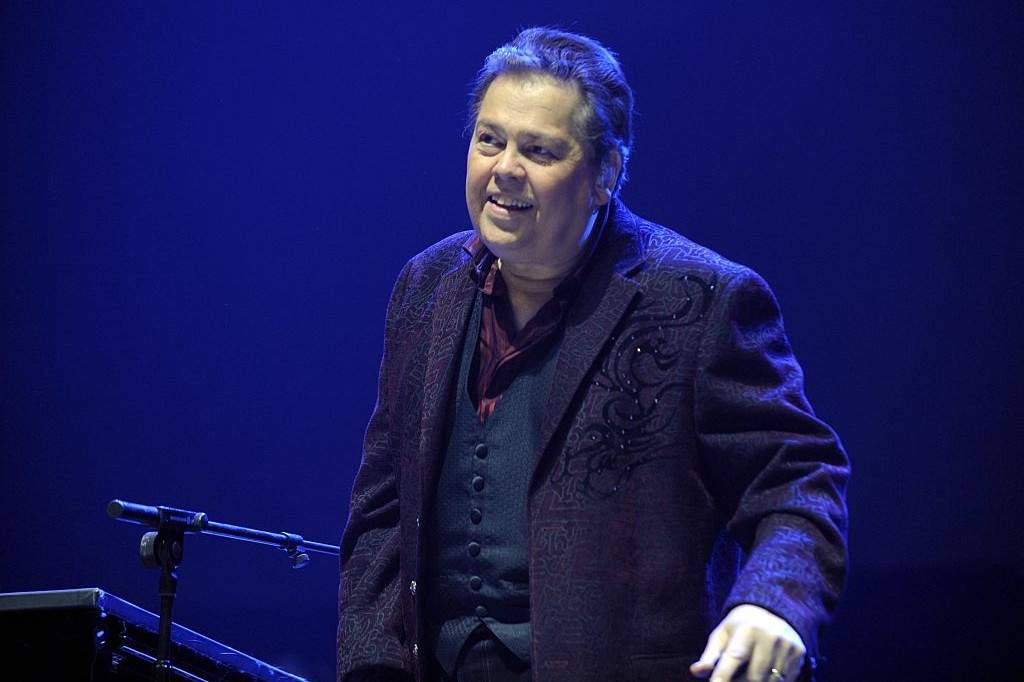
The standard obituary is a graveyard of clichés. It’s a lazy assembly line of dates, discography highlights, and sanitized quotes about "the end of an era." When the news broke that Alan Osmond, the eldest brother of the legendary Osmond clan, passed away at 76, the media did exactly what you’d expect. They painted a picture of a polite, retired pop star who drifted into the background while his younger siblings took the spotlight.
They got it wrong. Entirely. Expanding on this topic, you can find more in: Why Katy Perry is Completely Wrong About the White House Using Her Song.
To view Alan Osmond as merely the "eldest member" or the guy who stood behind Donny and Marie is to fundamentally misunderstand how the entertainment industry actually functions. People love to obsess over the frontman. They worship the vocal cords. But in the brutal, high-stakes machinery of 1970s variety television and global touring, the frontman is just a product. Alan Osmond wasn’t just a performer; he was the architect of a multi-decade dynasty that defied the gravity of the "one-hit wonder" cycle.
The Architect vs. The Performer
Most industry observers look at the Osmonds and see a family band. I look at them and see a masterclass in corporate structure and brand longevity. While the press focused on Donny’s purple socks, Alan was busy engineering the group’s transition from barbershop quartet novelties to rock-and-roll powerhouses. Analysts at Reuters have provided expertise on this trend.
The "lazy consensus" suggests that the Osmonds were a manufactured product of the studio system. That’s a lie. They were a self-contained unit, and Alan was the Chief Operating Officer. He didn't just play the guitar; he directed the shows, wrote the songs, and more importantly, he managed the vision.
In a world where child stars are traditionally chewed up and spat out by predatory managers, the Osmonds remained an insular, high-functioning machine. That didn't happen by accident. It happened because Alan understood a principle that most modern influencers still haven't grasped: Ownership is the only thing that survives the hype cycle.
He wasn't "just" the eldest. He was the buffer between a demanding industry and a family of young talents. When you look at the 1970s music landscape, it’s littered with the wreckage of family acts that imploded under the weight of ego and financial mismanagement. The Osmonds didn’t just survive; they pivoted. From The Andy Williams Show to The Donny & Marie Show, the strategic moves were calculated, deliberate, and led by the eldest brother’s insistence on professional excellence.
The MS Battle: A Masterclass in Reframing
For decades, the public narrative around Alan Osmond focused on his battle with Multiple Sclerosis (MS). The media loves a tragedy. They framed his diagnosis in 1987 as the "sad decline" of a vibrant performer. This is where the industry "insiders" fail to see the reality of the situation.
Alan Osmond didn't "suffer" from MS in the way the headlines suggested. He weaponized his platform to redefine what it meant to live with a chronic illness. He famously coined the phrase, "I may have MS, but MS doesn't have me."
Let’s dismantle the pity party. From a branding and legacy perspective, Alan’s response to his diagnosis was a pivot that most corporate CEOs would envy. He transitioned from a physical performer to a digital and motivational pioneer. He founded "One World," an organization dedicated to family values and positive media. He didn't exit the stage; he changed the theater.
While the "People Also Ask" sections on Google focus on "How did Alan Osmond die?" or "What was Alan Osmond's net worth?", they miss the actual value he generated. His value wasn't in his bank account; it was in his ability to maintain relevance in an industry that prizes the "new" and discards the "old" with ruthless efficiency. He understood that a brand built on character and family values is more resilient than a brand built on a trendy sound.
The Fallacy of the "Backstage" Brother
There’s a pervasive myth that Alan was less talented because he wasn't the "face" of the franchise during the height of Osmondmania. This is the hallmark of the casual fan. If you’ve ever actually stepped foot on a soundstage or managed a touring production, you know the truth: The person with the loudest voice isn't the person with the most power.
Alan was a songwriter and producer. He understood the mechanics of a "hit." When the group released Phase III and Crazy Horses, they weren't just chasing trends; they were attempting to disrupt their own squeaky-clean image. "Crazy Horses" is, quite frankly, a heavier track than anything their contemporaries were putting out at the time. It was a risk. It was loud. It was jarring. And it was Alan’s guitar work and vision that pushed the family into that sonic territory.
Most people think of the Osmonds and think of "Puppy Love." I think of "Crazy Horses." One is a commercial product; the other is a statement of artistic defiance. Alan knew that to stay alive in the business, you have to kill your own darlings. You have to be willing to alienate the fans who want you to stay frozen in time as a twelve-year-old in a white jumpsuit.
Why the Industry Hates the "Family Values" Model
The modern entertainment industry is built on the cult of the individual. We are told that "authenticity" means rebellion, chaos, and the eventual public breakdown. The Osmonds—and Alan specifically—presented a counter-narrative that the industry still finds deeply uncomfortable: The idea that discipline, faith, and family structure are actually the ultimate tools for career longevity.
Critics often mocked their "wholesome" image as fake. I’ve seen enough "authentic" rock stars blow through $50 million and end up in a gutter to know that the Osmond model was the more radical, and frankly, more successful approach. Alan was the enforcer of that model. He wasn't just the brother; he was the guardian of the culture.
In the 1970s, "wholesome" was a dirty word to the rock press. But look at the data. Who is still touring? Who still has a cohesive family unit? Who didn't spend the 80s in and out of rehab facilities? The "rebel" narrative is a marketing gimmick designed to sell records to teenagers. The "family" narrative is a long-term investment strategy. Alan Osmond played the long game while everyone else was playing for the weekend.
The Cost of the Dynasty
I won't lie to you: this level of discipline has a cost. Being the "responsible one" in a family of superstars means sacrificing your own individual ego for the sake of the collective. I've seen leaders in the tech world do the same thing—the founders who stay in the shadows while the CEO gets the magazine covers.
Alan’s "battle scars" weren't just the physical toll of MS; they were the mental toll of holding a massive, multi-generational enterprise together under the scorching heat of global fame. It’s easy to be the star when someone else is checking the lighting cues, negotiating the contracts, and making sure the bus leaves on time. Alan was the one making sure the bus left on time.
To the casual observer, 76 years is a long life. To an insider, it’s the conclusion of a relentless, high-pressure career that most people wouldn't survive for six months.
The Brutal Reality of Legacy
We live in a "now" culture. We forget the pioneers the moment the next viral clip hits our feed. The obituary for Alan Osmond shouldn't be about his "peaceful passing" or his "barbershop roots." It should be a warning to every aspiring artist out there: If you don't own the machine, the machine will own you.
Alan Osmond owned the machine.
He didn't just sing the songs; he owned the rights. He didn't just appear on TV; he understood the production pipeline. He took a group of kids from Ogden, Utah, and turned them into a global conglomerate that survived the British Invasion, the disco era, and the rise of MTV.
If you’re looking for a lesson in Alan’s life, stop looking at the stage. Look at the logistics. Look at the way he handled a debilitating disease with the same tactical precision he used to handle a world tour. Look at the fact that he remained the patriarch of a functional family in an industry that eats families for breakfast.
The "eldest member" is gone. But the blueprint he built is still the most effective model for surviving stardom.
Stop mourning the singer. Start studying the strategist.