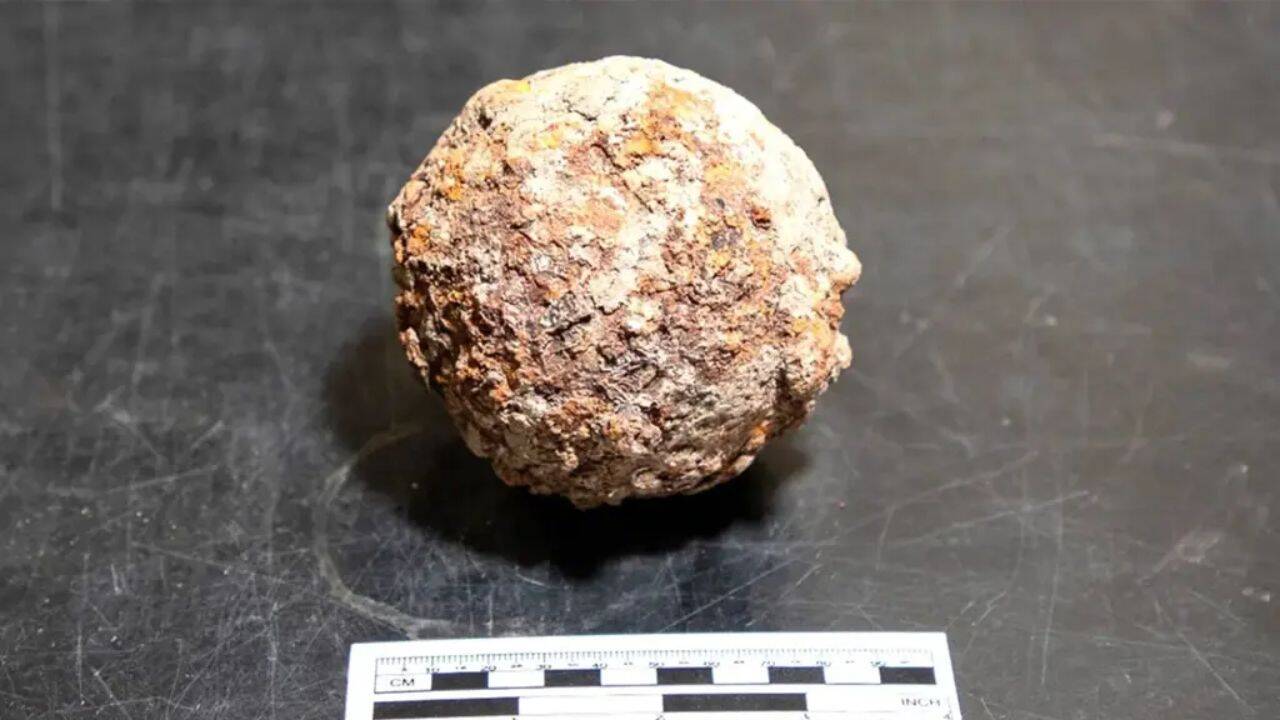
Archaeologists at the Alamo have unearthed an iron cannonball dating back to the legendary 1836 siege. This discovery marks another physical link to the deadly 13-day confrontation between Texan defenders and the Mexican army under General Antonio López de Santa Anna. Found during ongoing preservation work at the San Antonio historic site, the artifact weighs approximately four pounds and matches the caliber of artillery known to be stationed within the compound. Preliminary analysis indicates this specific projectile was likely fired by Texan forces rather than the Mexican military, offering fresh insight into the defenders' desperate artillery strategy.
The unearthing of battlefield ordnance changes how historians map the daily reality of the siege. For decades, popular narratives painted the Alamo defenders as static, heavily outgunned rebels waiting for an inevitable breach. The physical evidence tells a different story. It shows an active, aggressive counter-battery campaign.
The Ballistics of a Desperate Defense
Artillery pieces are vocal historical witnesses. When a four-pound iron ball is pulled from the soil of the Alamo plaza, it brings a strict set of mechanical constraints with it. It tells us about the bore of the gun, the quality of the powder, and the desperation of the gunners.
Texan forces possessed a surprisingly diverse arsenal. They had captured over twenty artillery pieces from Mexican forces during the capitulation of General Martín Perfecto de Cos in December 1835. This collection was a logistical nightmare. The guns ranged from small four-pounders up to a massive 18-pounder iron siege gun. Keeping these various calibers supplied with matching ammunition required improvisation.
When the Mexican army arrived in late February 1836 and began establishing batteries along the San Antonio River, the Texans did not just take cover. They fired back. The placement of this newly discovered cannonball suggests it was fired inward or dropped during a chaotic reloading sequence near one of the fort's internal defensive positions.
The defenders were running low on manufactured ammunition early in the siege. To compensate, they used scrap iron, horseshoes, and even chopped-up iron nails to fill their cannons. Finding a pristine, intact four-pound iron ball indicates that the defenders were carefully husbanding their solid shot for high-value targets, such as the Mexican artillery emplacements that were slowly inching closer to the compound walls.
What the Dirt Reveals About the Final Assault
Excavations within urban environments are notoriously difficult. San Antonio has grown around and over the original footprint of the mission for nearly two centuries. Every layer of soil represents a different era of occupation, from Spanish colonial times to modern tourism.
Sifting through the mythology
To find an object undisturbed from the 1836 layer requires meticulous stratigraphic control. The artifact was located in an area associated with the western wall or the low barracks, zones that saw intense fighting during the pre-dawn hours of March 6.
The position of the ball contradicts the idea that the Alamo was completely flattened by Mexican bombardment. Santa Anna's artillery was largely light field pieces, designed to break infantry formations rather than breach thick stone walls. The discovery of Texan-linked ammunition within the perimeter highlights how the defenders utilized their artillery until the very moment the walls were overrun.
The logistics of mud and iron
The weather during the siege was cold and rainy. Moving heavy iron guns through the thick clay of the Bexar region required immense physical effort. The Mexican army struggled to bring up their heavier siege pieces, which left them vulnerable to the Texans' longer-range artillery during the opening week of the investment.
This window of opportunity allowed figures like Almaron Dickinson, the master of ordnance for the garrison, to direct highly disruptive fire into the town of San Antonio, where Mexican troops were attempting to quarter. The four-pounder was the workhorse of this counter-bombardment. It was light enough to be pivoted quickly by a small crew but possessed enough kinetic energy to collapse adobe walls at several hundred yards.
The Broken Chain of Historical Documentation
Relying solely on written reports from the Texas Revolution invites distortion. Mexican official reports often exaggerated the number of defenders and minimized their own casualties to appease the government in Mexico City. Texan accounts, often written months or years later by survivors who were not inside the fort during the final assault, lean heavily on romantic heroism.
The dirt does not lie. The physical presence of ordnance provides an objective dataset that overrides partisan reporting.
When an artifact like this is discovered, it undergoes rigorous testing. X-ray fluorescence can determine the specific chemical composition of the iron. This helps researchers trace the ore back to its original foundry. Many of the cannonballs used during the battle were cast in Mexican foundries like the one at Durango, which supplied the Mexican army. If the chemical signature of this ball matches Mexican manufacturing, yet it was found in a context that suggests it was fired from the fort, it confirms the extensive reuse of captured Mexican supply depots by the Texan rebels.
This reuse of enemy material was a double-edged sword. The Texans had the guns and the balls, but they lacked a consistent supply of gunpowder. The powder they did have was often degraded by damp storage conditions in the mission's old church. This reduced the muzzle velocity of their shots, meaning that a four-pound ball fired from the ramparts might fall short of its intended target, plunging into the dirt inside the outer lines where archaeologists found it today.
Preserving a Modern Battlefield in an Urban Grid
The discovery comes at a critical time for the site. The ongoing redevelopment of the Alamo Plaza seeks to balance historical reverence with the demands of a modern city. This tension often pits preservationists against local business interests and urban planners.
Locating authentic artifacts beneath the pavement proves that the historic footprint extends far beyond the iconic church facade. The entire plaza remains a gravesite and a laboratory. Every construction trench dug for utility lines or foundation stabilization risks disturbing these fragile clues.
The recovery of this cannonball underscores the necessity of having archaeological monitors on-site for every square inch of earth moved. Without these strict protocols, pieces of the 1836 puzzle would simply disappear into dumpsters, lost to history forever. The artifact will now undergo stabilization treatment to prevent the iron from flaking and oxidizing away after being exposed to the air.
The strategic reality of the Alamo was defined by math and metallurgy, not just martyrdom. The defenders lost the fort because they were outnumbered and lacked a mobile relief force, but their artillery duels show a calculated attempt to break the morale of the Mexican infantry before the walls were ever breached. The recovery of a single iron sphere reminds us that the battle was fought with cold calculations of range, weight, and gunpowder.