Suffocation.
You do not need a hand over your mouth to know the feeling; sometimes it arrives through the gap beneath a bedroom door at three in the morning, heavy, sulfurous, and thick enough to coat the back of your throat like warm grease. For another look, check out: this related article.
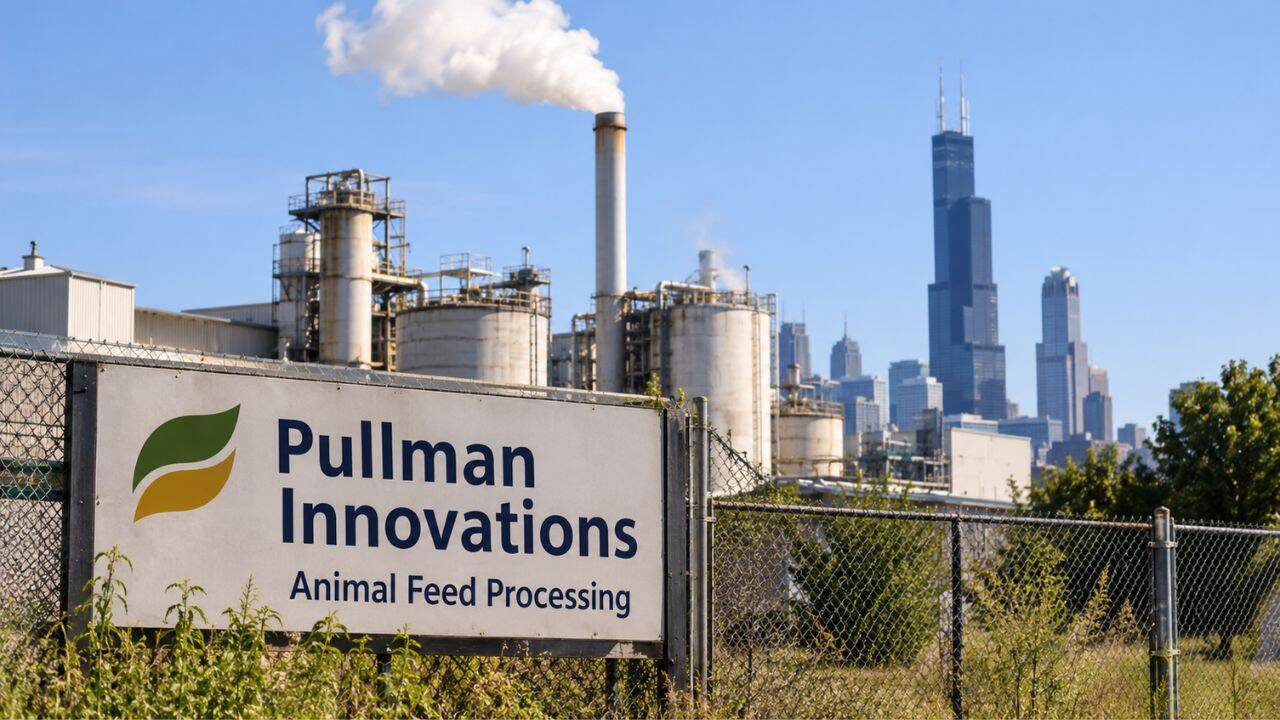
For years, residents living near Chicago’s industrial corridors have woken up to that exact sensation. It is not merely an unpleasant odor wafting off a distant smokestack or the passing exhaust of a diesel truck idling on a humid afternoon. It is the unmistakable, eye-watering stench of rotten eggs—a chemical signature that settles into curtains, clings to children’s winter coats, and turns the simple act of opening a kitchen window into a calculated risk. When a Cook County judge ordered a Chicago animal-feed processing plant to halt operations until 2027 over persistent, noxious emissions, the headlines treated it like a quirky local nuisance. They focused on the colorful description of the smell. They missed the quiet violence of what it actually means to live inside a cloud you cannot outrun.
The Architecture of an Invisible Cage
To understand why a court order shutting down a single facility until 2027 matters, you first have to picture what happens to a human body when its refuge stops being safe. Consider a hypothetical resident—let us call her Elena—living four blocks downwind from a rendering and animal-feed facility on the Southwest Side. On paper, Elena owns her brick two-flat. She pays her property taxes, tends a small patch of marigolds by the stoop, and works a steady shift at a nearby clinic. Related reporting regarding this has been published by Reuters.
Yet on nights when the wind shifts off the Sanitary and Ship Canal, Elena does not own her home. The air owns it.
Think of persistent industrial odor like a slow, invisible water leak inside the walls of a house. At first, you notice a faint stain on the plaster and tell yourself you will deal with it next weekend. Then the drywall softens. Before long, mold spreads behind the baseboards, ruining the air quality in rooms where your family sleeps, and no amount of surface cleaning fixes the rot because the source sits outside your property line. That is the daily reality of chronic industrial air pollution. You buy HEPA filters that hum like jet engines in the hallway. You stuff rolled-up towels against the window frames in July while the rest of the city enjoys a lake breeze. You apologize to visiting relatives for the smell in your own living room, swallowing a sharp, irrational shame for a mess you did not make.
I still remember the first time I stood on a residential sidewalk near one of Chicago’s heavy industrial zones on a damp October evening, notebook in hand, waiting for a community meeting to start. Within ten minutes, my eyes began to sting. A metallic, nauseating sourness settled on my tongue, the kind of smell that triggers an instinctive gag reflex before your brain even registers what you are breathing. Residents walked up to the church steps carrying folders stuffed with city inspection logs, air-monitor printouts, and emergency room discharge papers. None of them looked surprised by my reaction. They had lived with it so long that they measured the seasons not by the calendar, but by how badly the wind carried the stench of decomposing animal byproducts across their porches.
What Rotten Eggs Actually Signal
There is a dangerous temptation, especially among people who live miles away in breezy, tree-lined neighborhoods, to dismiss odor complaints as mere hypersensitivity. A smell, after all, sounds trivial compared to a visible oil spill or a collapsed bridge.
That assumption gets the biology entirely backward.
When human noses detect the sharp, unmistakable reek of rotten eggs, they are almost always registering hydrogen sulfide alongside a cocktail of volatile organic compounds produced when animal tissues, fats, and proteins break down under heat and pressure. Animal-feed plants take slaughterhouse scraps, offal, and rendering materials and cook them down into protein meals and fats used in livestock and pet food. It is an essential link in the agricultural supply chain, turning waste into usable commodities. When operated with tight containment, scrubbers, and negative-pressure ventilation, the process stays locked inside steel vessels. When containment fails—or when a facility runs beyond the capacity of its pollution controls—those gases escape straight into the surrounding streets.
Even at low concentrations, hydrogen sulfide is far more than a culinary annoyance. Public health agencies, including the Agency for Toxic Substances and Disease Registry, document that chronic exposure to low-level sulfurous emissions triggers headaches, nausea, throat irritation, watery eyes, and severe asthma flare-ups. For a child with reactive airways or an elderly neighbor managing chronic obstructive pulmonary disease, a bad odor night is not an inconvenience. It is a night spent upright in a chair, gripping a rescue inhaler, listening to every wheeze and wondering whether the chest tightness will ease before dawn.
Worse still is the psychological toll of sensory entrapment. Unlike loud construction noise, which stops at five o'clock, or blinding floodlights, which you can block with blackout curtains, air follows you everywhere. You cannot hold your breath for eight hours while you sleep. Over months and years, that helplessness curdles into chronic stress, sleep deprivation, and a deep, simmering distrust of the institutions tasked with protecting public health.
A Pattern Written in Brick and Zoning Maps
None of this happened by accident, and anyone pretending this single Chicago ruling is an isolated fluke has never looked closely at the city’s zoning map.
For more than a century, Chicago built its economic muscle by placing heavy industry right alongside the working-class neighborhoods that supplied its labor. Stockyards, tanneries, steel mills, chemical terminals, and rendering plants clustered along the rivers and rail corridors, separated from family homes by little more than an alley or a chain-link fence. Over the decades, as factories modernized or closed, residential blocks remained deeply rooted—home to Black, Latino, and immigrant families who built churches, schools, and multigenerational communities in the shadows of smokestacks.
When new industrial facilities move in or existing plants expand their output, they frequently land in these exact same corridors, compounding decades of cumulative environmental burden. Residents file complaints through the city’s 311 system. Inspectors arrive hours later, after the wind has shifted or the plant has dialed back its cookers, and record that no violation was detected at the time of inspection. Fines, when they are finally issued, often amount to a few thousand dollars—less than the cost of a single day’s lost production, absorbed quietly as a routine operating expense.
I will admit something that used to frustrate me deeply when covering environmental enforcement: the legal standard for proving nuisance and air violations is maddeningly slippery. Unlike a speeding ticket clocked by a radar gun, proving that a specific plant caused a specific wave of nausea three blocks away requires stacks of contemporaneous logs, wind-direction data, chemical sampling, and residents willing to testify under oath about the most intimate details of their daily misery. It is exhausting, slow, and stacked heavily in favor of corporate defendants who can afford environmental engineers and drawn-out administrative appeals.
That is precisely why the Cook County judge’s decision to halt operations at the animal-feed plant until 2027 carries such seismic weight.
The Turning Point in the Courtroom
When a court steps in and orders a facility to cease operations for an extended period—stretching all the way into 2027—it signals that incremental promises have finally run out of road. It means the evidence of persistent, unmitigated harm became too overwhelming to paper over with another consent decree or another six-month compliance plan.
Consider what happens next when a judge pulls the emergency brake on a polluting operation. First, the immediate physical relief arrives almost overnight. Within days of the cookers going cold and the exhaust fans falling silent, the air over the surrounding blocks clears. Neighbors step onto their front porches in the evening without instinctively pulling their collars over their noses. Parents let their kids ride bikes down the block after dinner without checking the wind direction first. The background hum of dread—that low-grade anxiety every time a humid front rolls in—finally dissipates.
Second, a multi-year shutdown forces real structural accountability rather than cosmetic patchwork. A temporary weekend pause allows a company to clean a few filters and resume business as usual on Monday morning. A suspension stretching to 2027 demands comprehensive engineering overhauls: enclosing open-air transfer bays, installing high-efficiency thermal oxidizers or biofilters, sealing ductwork, and proving to regulators and the court that the facility can actually contain its emissions before a single batch of raw material is processed again.
Third, and perhaps most importantly, it shifts the balance of power across Chicago’s industrial corridors. Every operator running aging equipment next to residential blocks watches a ruling like this closely. For decades, the unspoken calculation in heavy industry was simple: pay the occasional fine, drag out the litigation, and bet that working-class neighbors will eventually give up. A multi-year operational halt flips that math upside down. Suddenly, ignoring the neighborhood becomes the single most expensive mistake a business can make.
The Questions Left Hanging in the Breeze
Of course, celebrating a court order does not erase the complications that come with it. Honest reporting requires acknowledging the tension sitting right beneath the surface of any plant shutdown.
What happens to the workers who clocked in at that facility every morning to support their own families? Blue-collar industrial jobs in Chicago are neither abundant nor easily replaced, and the people operating the machinery inside an animal-feed plant are rarely the executives who decided to defer maintenance on odor-control systems. A just transition demands that environmental enforcement hold corporate leadership accountable without treating frontline workers as disposable collateral.
And what happens to the city’s broader regulatory framework once the headlines fade? A single judge can halt a single rogue facility, but courts cannot police every smokestack and loading dock across seventy-seven community areas. True protection requires proactive air monitoring stationed directly in overburdened neighborhoods, strict cumulative-impact rules that stop cities from piling new polluters onto already exhausted zip codes, and enforcement teeth sharp enough that companies fix their scrubbers long before neighbors have to beg a judge for the right to breathe.
For now, though, the victory belongs to the people who refused to accept suffocation as the price of their zip code—the neighbors who kept logging the hours, documenting the headaches, and testifying in courtrooms until someone with the power to stop it finally listened.
Tonight, on a quiet block on Chicago’s South Side, someone is going to walk over to their living room window, unlatch the lock, and slide the glass open an inch just to feel the cool night air move across the room—without flinching.