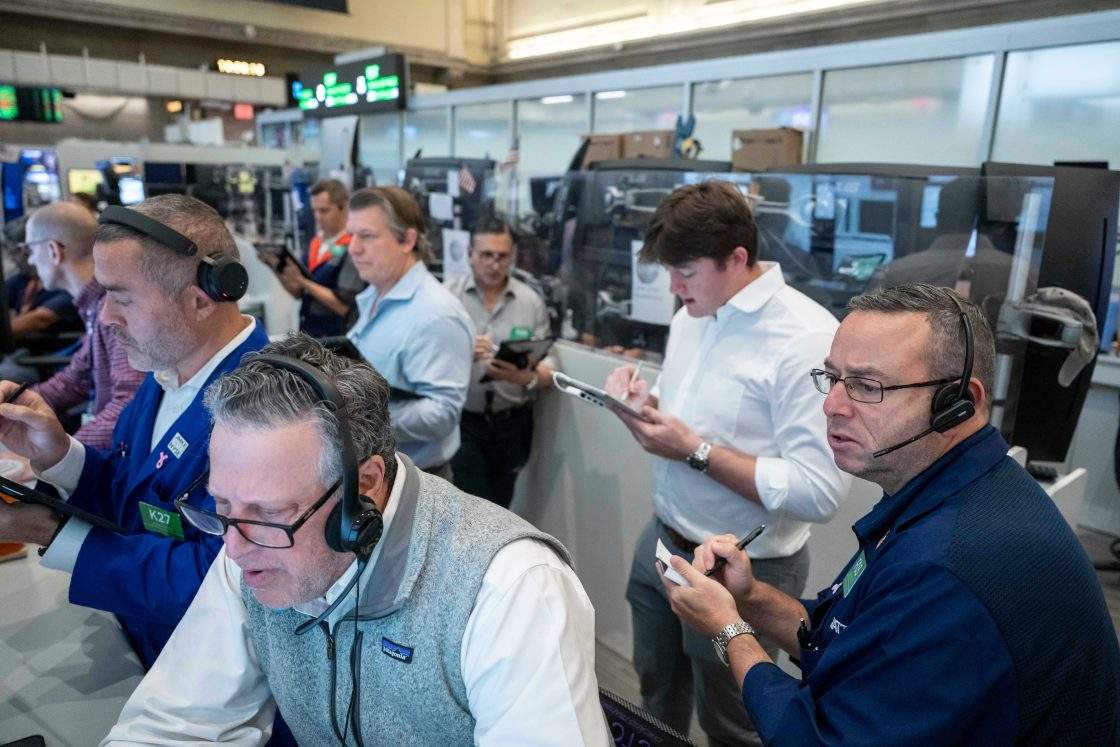
Wall Street hates surprises, especially when they come wrapped in an inflated price-to-earnings ratio. The recent AI stock sell-off didn't just dent a few tech portfolios—it dragged the broader market down and erased the hard-won midterm rally gains investors were celebrating just weeks ago.
If you've been watching the S&P 500 and the Nasdaq closely, you already feel the whiplash. One week, historical post-election tailwinds were pushing equities higher. The next, institutional money started dumping semiconductor and cloud infrastructure names at a pace we haven't seen since the early rate-hike scares. Meanwhile, you can read other developments here: Salon Didn't Die Because of Big Tech It Died Because It Became Unreadable.
Here's the blunt truth. The market finally started asking a question it spent two years ignoring: when does all this artificial intelligence spending actually turn into bottom-line profit?
The Math Behind the AI Stock Sell-Off
For months, big tech companies treated capital expenditures like a badge of honor. Microsoft, Alphabet, Meta, and Amazon poured tens of billions of dollars into data centers, custom silicon, and massive GPU clusters. Wall Street cheered every single dollar spent. Investors assumed that whoever built the biggest compute cluster would automatically win the next decade. To understand the complete picture, we recommend the excellent report by Investopedia.
That blind faith just hit a brick wall.
When hyperscalers spend upwards of $50 billion to $80 billion a year on infrastructure, depreciation expenses eventually show up on the income statement. You can't hide massive hardware costs forever. Once earnings reports started showing margin compression alongside slower-than-expected enterprise software adoption, the smart money hit the sell button.
Think about how index concentration works right now. Because the largest tech companies make up roughly a third of the S&P 500's total market capitalization, they don't just participate in the market—they are the market. When Nvidia, Microsoft, or Broadcom drop 5% to 8% in a few sessions, the entire index bleeds. Even if healthcare, energy, and industrial stocks hold steady, the headline numbers look ugly.
Why the Midterm Rally Evaporated So Fast
Historically, the period following U.S. midterm elections gives stocks a reliable boost. Gridlock in Washington usually means fewer sudden regulatory shocks or tax changes, and institutional funds love predictability. That exact dynamic fueled the initial bounce earlier this month.
But historical patterns don't stand a chance against valuation compression.
A midterm rally relies on broad market participation and steady risk appetite. When the primary engine of market growth—the AI trade—stalls out, liquidity dries up across the board. Hedge funds running systematic risk-parity strategies don't care about midterm election history. When volatility spikes in mega-cap tech, those algorithms automatically reduce equity exposure across every sector to keep portfolio risk within strict limits.
That mechanical selling creates a feedback loop. Tech drops, volatility rises, systematic funds sell everything else, and suddenly your safe value stocks are down 3% too.
What Institutional Traders Are Watching Right Now
If you talk to institutional desk traders, they aren't panicking about the death of artificial intelligence. Nobody thinks companies are going to unplug their servers and go back to spreadsheets. Instead, they're repricing the timeline.
In 2023 and 2024, investors priced AI stocks as if enterprise adoption would happen overnight. By late 2026, reality looks a lot slower and messier. Corporate CFOs are scrutinizing software budgets. Paying $30 per user per month for an AI assistant sounds great in a keynote presentation, yet many IT departments are canceling renewals after realizing employees barely use the tools.
There are three specific metrics driving institutional selling right now:
- CapEx-to-Revenue Ratios: Analysts are punishing companies that keep raising spending guidance without showing a corresponding jump in cloud or software revenue.
- Semiconductor Inventory Cycles: Chipmakers have enjoyed unprecedented pricing power, but any hint of hyperscalers digestion—pausing orders to absorb existing hardware—triggers immediate multiple contraction.
- Power and Grid Bottlenecks: Building data centers is easy compared to getting gigawatts of electricity permitted and connected to the grid. Delays in power delivery push revenue recognition out by quarters, if not years.
I've watched plenty of tech cycles play out over the past fifteen years, and they all follow this exact script. First comes the infrastructure gold rush where hardware makers look invincible. Second comes the "show me the money" phase where software companies struggle to monetize the infrastructure. We are squarely in phase two.
Common Mistakes Retail Investors Make During Tech Corrections
Watching green numbers turn deep red overnight triggers the worst instincts in individual investors. After managing portfolios through multiple drawdowns, I see the same three errors happen every single time a crowded trade unwinds.
First, people confuse a good company with a good stock price. A semiconductor giant can have brilliant engineers, an untouchable patent moat, and growing revenue—and still lose 30% of its market value because it was priced for absolute perfection. Valuation always matters eventually.
Second, investors try to catch falling knives on day two of a sell-off. When mega-cap stocks break below key technical support levels like their 50-day or 200-day moving averages, institutional sellers rarely finish unloading their positions in forty-eight hours. Mutual funds and pension managers take weeks to rebalance massive positions. Buying heavily on the very first dip usually leaves you sitting on immediate losses.
Third, traders ignore the bond market. Treasury yields dictate the discount rate applied to future tech earnings. Because AI stocks derive so much of their value from profits expected five or ten years down the road, even a small uptick in the 10-year Treasury yield crushes their present value. If you're buying tech stocks without checking what yields are doing that morning, you're flying blind.
Where the Money Actually Rotates Next
Money doesn't vanish when it leaves mega-cap tech; it goes looking for safety and cash flow. During sharp AI pullbacks, capital typically rotates into sectors that benefit from lower valuations and tangible dividends.
Utilities have quietly become a fascinating battleground. On one hand, they're traditional defensive plays when tech gets volatile. On the other, power providers are the real bottleneck for AI expansion, giving them steady, regulated growth without the nosebleed valuations of chip stocks.
Financials and industrials also tend to absorb fleeing tech capital, provided the broader economy isn't tipping into a recession. Regional banks, insurance carriers, and manufacturing firms trade at a fraction of the Nasdaq's price-to-earnings multiple. When fund managers need to stay invested in equities—remember, most mutual funds aren't allowed to sit in 50% cash—they park money in boring businesses that generate immediate free cash flow.
How to Audit Your Portfolio Exposure Today
You don't need to liquidate your retirement account because Wall Street had a bad week. You do need to know what you actually own.
Open your brokerage account and look past the ticker symbols. If you own an S&P 500 index fund, a Nasdaq-100 ETF, and a few individual tech stocks, you aren't diversified. You're making the exact same bet three different ways. Run a quick overlap check to see what percentage of your total net worth sits in the top ten U.S. tech companies. If that number makes your stomach drop, trim your individual winners back to a position size that lets you sleep at night.
Check your stop-losses and cash reserves. Keep dry powder ready in a high-yield money market fund so you can buy quality companies once the institutional selling exhausts itself and volatility settles down. Look at companies generating real free cash flow today rather than businesses promising AI miracles in 2028. Set your target entry prices now, step away from the minute-by-minute ticker noise, and let the market come to you.