Aggressive feral cat control on New Zealand's Stewart Island (Rakiura) triggered a 52% population rebound in the critically endangered southern New Zealand dotterel within a single year, pushing total bird numbers back above 200 after a catastrophic brush with extinction.
For decades, conservation biology in New Zealand has been a zero-sum war against introduced mammalian predators. The southern dotterel (Charadrius obscurus obscurus), or pukunui, sits at the absolute sharp end of that conflict. Unlike its northern cousin, which clings to coastal sandspits on the North Island, the southern subspecies abandoned mainland New Zealand entirely in the late nineteenth century, retreating to the windswept subalpine tops of Stewart Island. Even there, isolation failed to buy safety. By the early 1990s, the global population had cratered to just 62 birds. An intensive initial trapping blitz pushed numbers back up to nearly 300 by 2011, proving recovery was possible. Then funding tightened, trapping intensity slipped, and the predators returned. By 2023, the population had collapsed again, falling below 120 individuals and leaving the species balanced on a razor's edge.
The recent 52% single-year surge is not a miracle of nature. It is the direct mechanical result of targeted, relentless lethal predator suppression across hostile subalpine terrain, demonstrating both the staggering biological resilience of native avifauna when predation pressure lifts and the sobering reality that New Zealand's conservation wins are permanently rented, never owned.
The Ecology of a Ground-Nesting Target
To understand why a single year of targeted cat management produced such a dramatic demographic swing, you have to look at the evolutionary wiring of the southern dotterel. Evolving for millions of years in an archipelago devoid of terrestrial mammals, New Zealand's shorebirds developed defense mechanisms calibrated exclusively for avian predators like falcons and skuas. Against eyes in the sky, camouflage and stillness work. Against a nocturnal mammalian hunter operating by scent and acute night vision, those exact instincts become fatal liabilities.
Southern dotterels breed on the exposed granite domes and boggy alpine herbfields of Stewart Island, roughly 500 to 900 meters above sea level. They scrape shallow nests directly into open gravel or cushion plants. During the austral spring and summer, females lay a clutch of three eggs, and both parents share incubation duties over a roughly 30-day window. Once hatched, chicks are precocial—able to walk and feed almost immediately—but they remain flightless for up to six weeks.
For nearly ten weeks from egg-laying to fledging, an entire generation sits defenseless on the ground in sub-freezing winds.
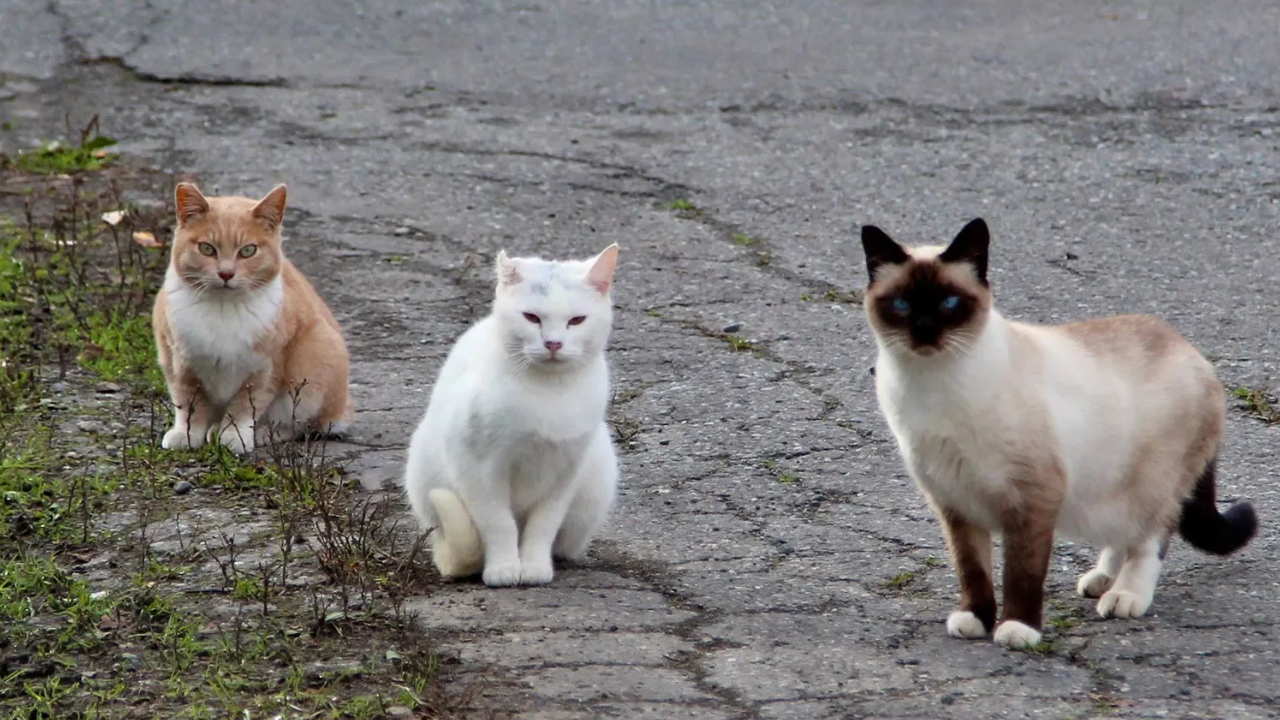
Feral cats (Felis catus), descendants of domestic animals brought to Stewart Island by nineteenth-century sealers, whalers, and settlers, treat these alpine summits as seasonal hunting grounds. While cats generally prefer sheltered lowland podocarp forests during the harsh winter months, rising spring temperatures drive them upward onto the open tops just as dotterels begin nesting. A single adult feral cat roaming the Tin Range or Mount Anglem can systematically wipe out dozens of nests and incubating adults in a matter of weeks. Because female dotterels sit tight on the nest at night when temperatures plummet, cats frequently kill not just the eggs or chicks, but the breeding females themselves. Losing adult females creates a demographic death spiral, skewing the sex ratio and stripping the population of reproductive capacity for years.
Inside the Stewart Island Trapping Blitz
When Department of Conservation (DOC) rangers and field contractors stepped onto the Rakiura tops to reverse the 2023 crash, they were not launching a gentle ecological experiment. They were executing a high-intensity containment operation across some of the foulest weather in the Southern Hemisphere. Stewart Island sits at 47 degrees south latitude, directly in the path of the Roaring Forties. Horizontal sleet, thick fog that drops visibility to three meters, and gale-force winds are standard operating conditions.
Standard trapping grids used in lowland forests fail on open alpine tops. Cats in subalpine environments behave differently than those in dense bush; they patrol ridgelines, follow human boot tracks to save energy, and exhibit extreme neophobia—suspicion of unfamiliar objects—around poorly disguised traps.
Network Geometry and Bait Mechanics
Field teams expanded and re-engineered the trap network across core breeding zones, including the Tin Range, Table Hill, and Mount Anglem. Rather than relying solely on passive kill traps, operators deployed a multi-layered defense system combining heavy-duty kill traps with live-capture cage traps checked daily via remote telemetry alerts.
Bait selection proved critical. Feral cats hunting live birds and lizards in the wild often ignore dried commercial lures or stale meat. Rangers utilized fresh rabbit meat, fish-based lures, and visual attractants designed to trigger a cat's predatory curiosity without alerting it to human scent. Every trap set required meticulous scent management; field workers wore dedicated gloves and positioned sets along natural pinch points—rock outcrops, drainage gullies, and wind-scoured saddles—where cats naturally funnel while moving between hunting territories.
The Role of Thermal Surveillance
Traditional monitoring relies on tracking tunnels—inked cards inside plastic sleeves that record paw prints—and motion-activated trail cameras. While useful for baseline presence data, cameras only tell you where a cat was yesterday.
To close the gap, conservation teams increasingly paired physical trapping with nocturnal thermal imaging sweeps and specialized predator detection dogs. Thermal monoculars allow rangers scanning open alpine tussock at night to spot the heat signature of a hunting cat from hundreds of meters away, distinguishing it immediately from roosting birds or distant rocks. When a trap-shy cat learns to skirt metal boxes, targeted night shooting and trained tracking dogs become the only tools capable of removing that specific animal before it clears an entire breeding basin.
Removing even a small number of resident alpine cats yields immediate biological dividends. Without constant nighttime predation, breeding pairs successfully hatched their three-egg clutches, and chick survival through the vulnerable six-week flightless window spiked dramatically. When rangers conducted the annual autumn flock count—the definitive census taken when adults and newly fledged juveniles gather at coastal roosts like Mason Bay and Awarua Bay—the numbers jumped by 52% in just twelve months.
The Counter-Argument and the Rat Paradox
Whenever a conservation agency announces a major predator control victory, uncomfortable ecological questions follow close behind. On Stewart Island, the primary complication is not public opposition to killing feral cats—New Zealanders largely accept lethal predator control as an existential necessity for native wildlife—but rather the complex trophic cascade triggered when you remove the apex predator from an invaded ecosystem.
Stewart Island is home to three species of introduced rats: ship rats (Rattus rattus), Norway rats (Rattus norvegicus), and Pacific rats or kiore (Rattus exulans). It also supports a dense population of Australian brushtail possums.
Feral cats eat dotterels, kiwis, and native skinks, but they also eat substantial numbers of rats. Ecologists call this mesopredator release. When you aggressively strip feral cats out of an environment without simultaneously suppressing rodent populations, rat numbers can explode. While a ship rat is too small to kill an adult southern dotterel, rats readily devour unattended eggs and newly hatched chicks. Possums, traditionally viewed as herbivores that strip forest canopies, are also opportunistic nest predators that eat eggs and chicks when they encounter them on the ground.
DOC field managers have had to calibrate their Stewart Island operations around this exact friction. Suppressing cats alone is a half-measure that risks trading one nest predator for thousands of smaller ones. Consequently, the dotterel recovery program must operate alongside an extensive, year-round network of rat bait stations and possum kill traps distributed across the transitional scrub zones below the alpine tops. Maintaining both grids simultaneously multiplies labor hours, helicopter flight costs, and supply logistics.
Why Cats Spark Fiercer Political Friction Than Stoats
From a purely biological standpoint, a feral cat on Stewart Island is no different from a stoat in Fiordland or a ferret in the Mackenzie Basin. All are introduced mammalian carnivores driving endemic island species toward extinction. Politically and culturally, however, cats occupy an entirely different tier of sensitivity.
New Zealand has one of the highest rates of domestic cat ownership in the developed world, with roughly 40% of households keeping at least one cat. That cultural attachment creates a persistent regulatory blind spot. While stoats, possums, and rats are formally classified as unwanted pests under national biosecurity frameworks, domestic and stray cats sit in a muddy legal gray zone.
On Stewart Island, the settlement of Oban sits just kilometers from critical wildlife corridors. Unneutered domestic cats roaming from residential properties in Oban can easily stray into adjacent bush, interbreed with established feral populations, or supplement the wild gene pool. Even well-fed house cats retain their hunting drive; ecological studies consistently show that pet cats allowed to roam outdoors kill native birds, reptiles, and invertebrates regardless of how much commercial kibble sits in their bowl at home.
Conservationists have spent years lobbying for mandatory microchipping, desexing, and containment laws in sensitive ecological buffer zones. Local councils often balk at enforcing strict cat bylaws out of fear of voter backlash. This creates a quiet absurdity at the heart of New Zealand's Predator Free 2050 strategy: taxpayers spend millions of dollars flying helicopters into freezing alpine wilderness to trap feral cats while local bylaws still permit unsterilized domestic cats to walk freely out of back doors into the exact same ecosystem.
The Trap of Stop-Start Conservation Funding
The most sobering lesson of the southern dotterel's 52% rebound is not that predator control works. We already knew it worked. The real lesson lies in what happened between 2011 and 2023.
In 2011, southern dotterel numbers stood at roughly 290 birds. At the time, the species was held up as a textbook conservation success story. Because the population appeared stable and the immediate crisis seemed resolved, funding priorities shifted toward other emergencies. Trapping frequencies on the Rakiura tops were dialed back. Maintenance cycles stretched out.
Feral cats did not respect the budget cycle. Within a decade, feline reinvasion from the surrounding forests erased nearly twenty years of hard-won population gains, driving the bird back down to 118 individuals.
Wildlife management in island ecosystems does not have a finish line unless total eradication is achieved. On a landmass the size of Stewart Island—covering roughly 1,746 square kilometers of dense rainforest, coastal dunes, and rugged granite mountains—complete eradication of feral cats, rats, and possums remains beyond current operational budgets and technical capabilities. Until large-scale eradication tools mature, every single southern dotterel alive today exists solely because humans actively suppress predators every spring and summer.
If funding dips again in five years, the population will crash again. It is a biological certainty.
What Comes Next for Rakiura's Alpine Survivors
Reaching a population of just over 200 birds buys the southern dotterel critical breathing room, moving it slightly back from the absolute edge of functional extinction. Genetic diversity remains perilously narrow, however. Having passed through multiple severe population bottlenecks—dropping to 62 birds in 1992 and under 120 in 2023—the species carries a compressed gene pool that leaves it vulnerable to novel avian diseases, extreme weather events driven by climate change, and sudden spikes in predator pressure.
Alpine warming presents an emerging, unquantified threat. As average temperatures rise across southern New Zealand, the snowline retreats and winter weather patterns soften. Milder winters on Stewart Island mean higher overwinter survival rates for feral cats and rats at high elevations, extending the seasonal window during which predators can hunt on the alpine tops.
To keep the recovery trajectory moving upward, conservation managers are now shifting toward permanent, year-round baseline suppression rather than reactive crisis interventions. Expanding automated, self-resetting traps—which use compressed gas to kill up to 24 pests without needing a human to reset the mechanism—offers a way to cut helicopter hours in brutal weather. Pairing those networks with mandatory domestic cat desexing and registration in Oban closes the back door on new feline recruitment.
A 52% rebound in twelve months proves that the southern dotterel still possesses the reproductive grit to reclaim its mountain habitat. Whether those 200-plus birds become 500 or slide back toward double digits depends entirely on whether humans have the institutional discipline to keep checking the traps long after the headlines fade.