The glare of three television screens lit up the small, cramped convenience store in central Seoul, casting a cold blue hue over rows of instant ramen and stacked rice cakes. It was just past 6:15 p.m. on a Wednesday. Outside, the steady, rhythmic hum of Seoul's evening rush hour was unfolding exactly as it always does. But inside, the older clerk behind the counter did not look at the customers. His eyes were locked on the synchronized countdown flashing across KBS, MBC, and SBS.
When the numbers finally hit zero, a collective intake of breath seemed to ripple through the city.
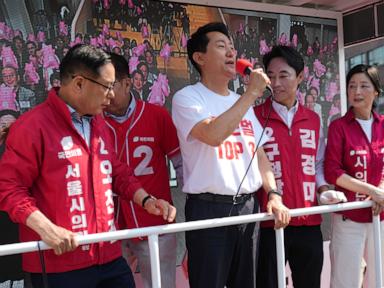
The joint exit polls did not just project a winner; they delivered a political earthquake. South Korea’s ruling liberal Democratic Party was forecast to secure a staggering landslide victory in the mayoral and gubernatorial elections, poised to capture at least 11 of the 16 crucial regional leadership posts. The conservative People Power Party (PPP) held a clear lead in only a single lonely district, leaving the remaining four trapped in a razor-thin deadlock.
To understand how a nation arrives at such a definitive, crushing verdict, you have to look beyond the cold graphs and percentages flashing on the news. You have to understand the invisible exhaustion that brought the voters to the ballot boxes in the first place.
The Long Shadow of a Fractured Night
Elections are often described as choices about the future, but in reality, they are a reckoning with the past. For South Korea, that past is remarkably recent and incredibly heavy.
Consider the modern political arc as a pendulum swinging violently between extremes. Just under two years ago, the nation watched in disbelief as former conservative President Yoon Suk Yeol attempted a desperate, ill-fated declaration of martial law. The political machinery of the country groaned under the weight of the crisis, culminating in Yoon’s historic impeachment, removal from office, and a subsequent life sentence in prison.
The trauma of that night fundamentally broke something within the conservative base.
When a family fractures, the neighbors hear the shouting through the walls. When a major political party fractures, the entire country feels the tremors. The PPP spent the months leading up to this election locked in a bitter, cannibalistic civil war. On one side stood the reformists, who had actively joined the liberals to impeach Yoon in a desperate bid to save the party's moral compass. On the other side sat the loyalists, digging in their heels to protect what remained of the old guard.
When voters see a house divided against itself, they rarely look for a key to the front door. They look for a new place to live.
The ruling liberal party, led by President Lee Jae Myung, stood waiting to receive them. Lee, who assumed power in a high-stakes snap election following Yoon's ouster, is approaching his first anniversary in office. His approval ratings have refused to budge from a commanding position above 60 percent. To the average citizen, he represents a rare commodity in modern politics: a sense of boring, predictable stability.
The Anatomy of an Exit Poll
There is a distinct anxiety to a South Korean exit poll. It is a highly sophisticated mathematical machinery, yet it relies entirely on the honesty of strangers walking out into the chilly evening air, whispering how they voted.
Metaphorically speaking, an exit poll is a medical scan of a democracy's nervous system. It tells you where the pain is before the patient even says a word.
On Wednesday, that scan revealed a profound realignment. The local elections were never just about trash collection routes, municipal budgets, or local zoning laws. They were a referendum on whether President Lee would be allowed to actually run the country, or whether he would spend the remainder of his term fighting a war of attrition against localized opposition.
Before Wednesday, the regional map was a sea of conservative red. The PPP held 14 of the 16 mayoral and gubernatorial seats across the country. This meant that while President Lee held the Blue House and a legislative majority in the National Assembly, his local execution was constantly bottlenecked by regional leaders who viewed his policies with open hostility.
Imagine trying to drive a powerful vehicle when every wheel wants to turn in a different direction. You burn a lot of fuel, make a tremendous amount of noise, and ultimately go nowhere.
By swinging at least 11 of those seats into the liberal column, the electorate did not just hand out promotions. They handed Lee the keys to the entire infrastructure of the state. With local governors and mayors aligned with the central government, regional policies regarding economic development, welfare distribution, and public transparency can move from paper to reality without being mangled by bureaucratic partisan warfare.
The Battle Lines of Seoul and Busan
Nowhere was this tension more palpable than in the fight for the capital. The Seoul mayoral race is historically the crown jewel of South Korean local politics, a position so visible it frequently serves as a direct launchpad to the presidency.
As the night deepened, a sharp, bitter dispute erupted between the parties. The national election commission announced a sudden shortage of ballot papers at 14 polling stations across Seoul, forcing a temporary suspension of voting. To ensure everyone in line could participate, officials extended voting hours past the standard closing time.
The reaction was instant and fierce. PPP leader Jang Dong-hyeok publicly condemned the logistical failure, claiming it compromised the integrity of the vote and demanding an immediate halt to the counting process. The Democratic Party dismissed the protest out of hand, labeling the demand as an absurd overreaction, though they expressed formal regret over the commission's administrative blunder.
Meanwhile, hundreds of miles to the south, the coastal city of Busan was hosting its own quiet drama.
Busan has long been a fortress of conservative sentiment. Yet, running as an independent in a vital parliamentary by-election was Han Dong-hoon—the former leader of the conservative reformist faction who had been unceremoniously cast out of the PPP during its internal bloodletting. Han found himself locked in a razor-thin, agonizingly close race against Ha Jung-woo, a prominent Democratic Party candidate known for advising the president on artificial intelligence policy.
The stakes in Busan stretched far beyond the single seat up for grabs. A victory for an exiled independent like Han would signal that the anti-Yoon, reformist wing of the conservative movement could survive outside the traditional party structure, potentially forming a new center of gravity for a broken opposition. A loss, conversely, would likely trigger an ideological panic, forcing the remaining conservative loyalists to circle the wagons even tighter, deepening the isolation that cost them the election.
The Heavy Weight of a Mandate
There is a dangerous intoxicating quality to a landslide victory. When the numbers are that big, it is easy for a political party to believe they have been given a blank check written in the ink of public adoration.
But public support is rarely a product of love; it is a lease based on performance.
President Lee’s current popularity is anchored heavily to pragmatic realities. The stock market has enjoyed a sustained, buoyant season. His administration has pushed heavily for transparency in executive decision-making, a direct antidote to the backroom secrecy that doomed his predecessor. In foreign policy, his self-described "pragmatic diplomacy" has managed to soothe the nerves of anxious allies in Washington and Tokyo, proving that a liberal leader could maintain strong international security ties while pursuing progressive domestic reforms.
Yet, a mandate this absolute leaves no room for excuses.
When you control the presidency, the parliament, and the vast majority of the local government seats, you lose the ability to blame the opposition for your failures. Every economic downturn, every unfulfilled promise, and every systemic inefficiency belongs entirely to you. The voters have cleared the road; now they expect the government to drive.
The convenience store clerk in Seoul eventually looked away from the television screens, returning to his ledger as the final, official vote tallies began their long, slow climb into the night. The blue light of the screens kept humming, broadcasting images of cheering campaign offices covered in blue balloons, contrasted against the somber, empty corridors of conservative headquarters.
The people of South Korea did not march through the streets with banners to change their country's direction. They did something far more permanent. They walked quietly into small, curtained booths, picked up a stamp, and quietly rewrote the political geography of the nation.