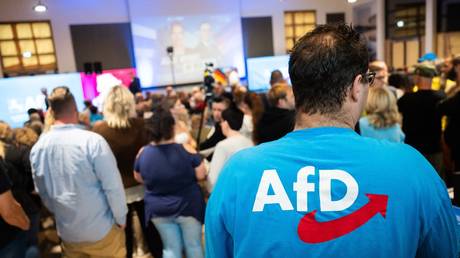
Brussels is watching eastern Germany with growing alarm. When the Alternative for Germany (AfD) secured a staggering 43.8 percent of the vote in Saxony-Anhalt's regional elections, political shockwaves radiated far beyond Berlin. Now, European policymakers are openly weighing a weapon usually reserved for foreign capitals like Budapest or Warsaw: freezing EU structural funds.
If you think regional politics stay local, look closer. Saxony-Anhalt stands to pull down roughly €2.95 billion from the European Union budget spanning 2021 to 2027. That cash pays for everything from high-tech medical gear in regional hospitals to crumbling school renovations. It is also the highest amount of EU regional money per capita allocated to any German state. Also making news lately: Why Algeria Breaking Ties With The UAE Is Actually About Real Estate Not Ideology.
Losing those funds would crush local infrastructure projects. Yet, European Parliament figures like Green lawmaker Daniel Freund are already arguing that the European Commission should withhold the money if an AfD-led administration takes shape and challenges core EU legal norms.
The Playbook Brussels Used Against Hungary
The threat of withholding billions is not an abstract theory. Brussels spent years testing this exact pressure tactic against Viktor Orbán in Hungary and nationalist leaders in Poland. By weaponizing the rule-of-law mechanism, the European Commission froze billions in development and recovery grants over alleged democratic backsliding and corruption. More information regarding the matter are explored by TIME.
In Hungary's case, a substantial portion of funds remained locked away until political shifts altered the landscape. European integration advocates look at those past battles and see a blueprint. The core argument goes like this: if a regional government actively opposes core EU migration rules, climate goals, or institutional values, Brussels has a duty to turn off the financial tap.
Luise Quaritsch from the Jacques Delors Centre think tank points out that Saxony-Anhalt could easily lose up to €500 million annually under a severe freeze. That figure represents about one-fifth of the state's total investment budget. Stripping away that kind of cash would completely halt regional economic development.
Local Deadlock Meets Continental Confrontation
The immediate domestic hurdle in Germany is just as messy as the European standoff. Despite capturing a massive 43.8 percent share of the vote, the AfD fell three seats short of an absolute majority in the state legislature. Mainstream parties like the Christian Democrats (CDU), Social Democrats (SPD), and the Greens have flatly refused to form a coalition with the right-wing populist party.
This leaves the hard-left Bündnis Sahra Wagenknecht (BSW) holding the kingmaker role with a handful of crucial mandates. While BSW figures have hinted at potential issue-by-issue cooperation, the political friction guarantees a deeply unstable government.
An unstable regional government hostile to federal and European directives creates a worst-case scenario for mainstream strategists. Reports from outlets like Die Welt and The Telegraph indicate that Berlin has quietly drawn up contingency plans to bypass local obstructionism. These measures are designed to ensure that critical national and NATO logistics—such as military troop movements heading east toward Russian borders—cannot be blocked by a rebellious eastern state legislature.
How the AfD Responds to Financial Coercion
The party leadership isn't backing down. Federal parliamentary whip Bernd Baumann dismissed the financial threats outright, characterizing them as predictable desperation from out-of-touch establishment opponents. From the perspective of AfD organizers, using EU funding rules to punish voters for picking the wrong ballot box winner exposes the undemocratic core of the European project.
Voters in Saxony-Anhalt didn't vote for technocratic compliance. They voted against mainstream migration policies and economic stagnation. When Brussels threatens to pull road and school funding because of who won an election, it validates every anti-establishment narrative circulating through eastern Germany.
The standoff puts the European Commission in a trap of its own making. If Brussels acts, it risks radicalizing the local electorate even further and proving that EU integration strips away local democratic self-determination. If Brussels does nothing, it sets a precedent that member states and regions can openly defy integration milestones while feeding at the structural fund trough.
Keep an eye on how the coalition talks pan out in Magdeburg. The moment an executive takes power, the countdown begins for Brussels to either blink or pull the trigger.