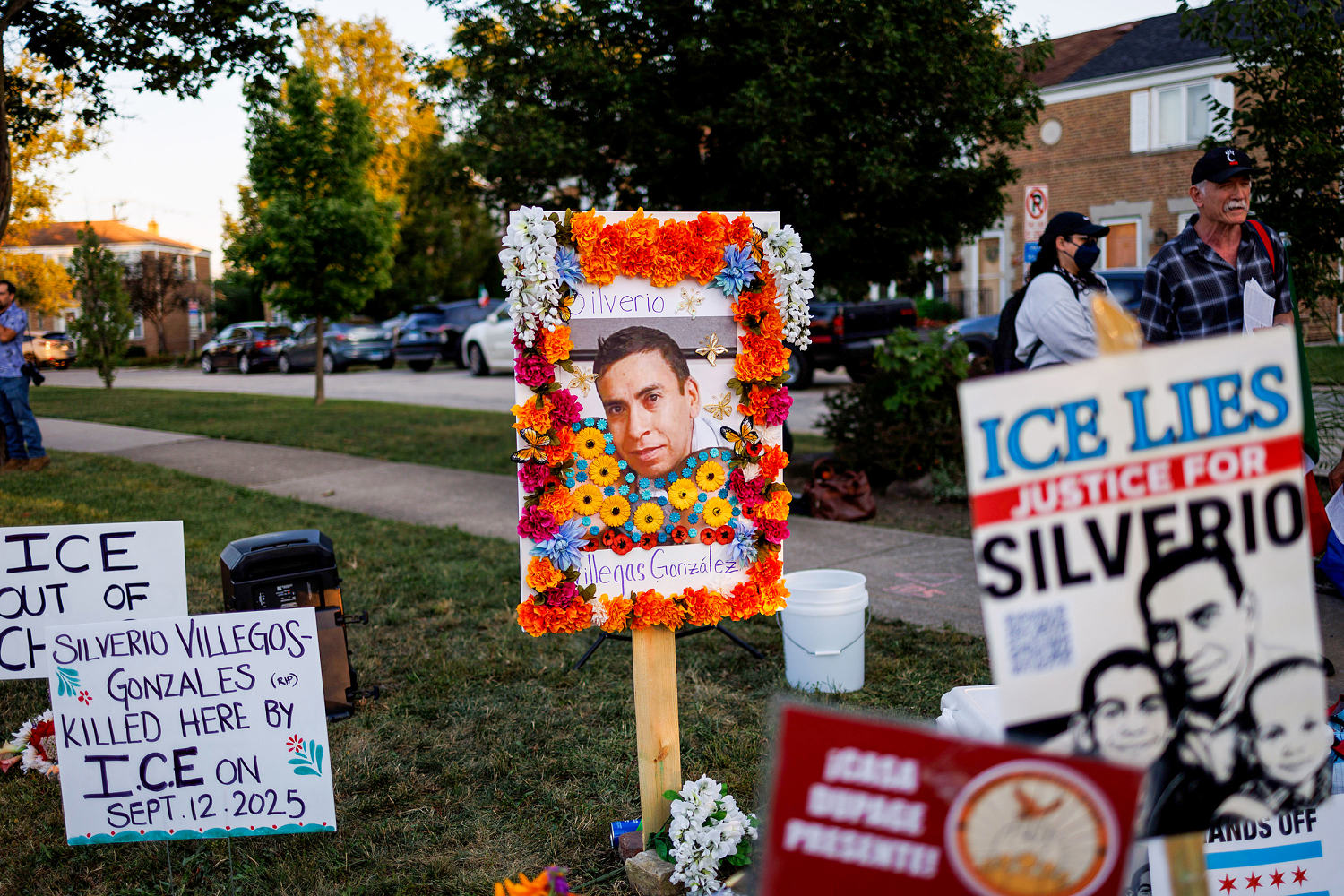
The machinery of federal detention does not operate in a vacuum. It grinds forward through administrative silence, procedural obscurity, and an institutional insulation that rarely cracks under the weight of a single tragedy. Yet, when the family of an immigrant father fatally shot by Immigration and Customs Enforcement officials files a formal administrative claim against the government, the legal and moral calculus shifts. This is not merely a wrongful death tort. It is an indictment of systemic failures that treat human life as an expendable line item in immigration enforcement.
Decades of covering federal accountability litigation reveal a familiar, grim choreography. A shooting occurs. Initial agency statements frame the event through a lens of immediate danger, officer survival, and split-second operational necessity. Weeks pass. The public moves on to the next crisis. But behind closed doors, a legal battle begins over the Federal Tort Claims Act, sovereign immunity, and the precise threshold where standard protocol mutates into lethal negligence.
The Anatomy of a Preventable Fatality
To understand why this specific death has ignited such fierce legal friction, one must examine the operational realities of immigration enforcement raids and tactical apprehensions. Federal agents operate with broad statutory authorities, but those authorities are constrained by internal use-of-force policies that mandate proportionality and de-escalation whenever feasible. When an agent draws a firearm and ends a life during an operation intended to enforce civil immigration violations, the evidentiary burden required to justify that ultimate action is extraordinarily high.
The administrative claim filed by the grieving family cuts straight to the core of this tension. It alleges that the fatal shooting was entirely preventable—a result of reckless tactical positioning, poor communication, and a profound failure of operational planning. In federal tort claims, proving preventability requires reconstructing the moments before the trigger was pulled, stripping away the defensive rhetoric of the agency involved, and exposing the structural decisions that placed armed officers in a chaotic scenario without adequate oversight.
Consider the mechanics of tactical execution in residential environments. Standard law enforcement training emphasizes containment, clear identification, and the minimization of civilian risk. In federal immigration enforcement, however, the integration of specialized tactical units into routine administrative operations often blurs the line between criminal interdiction and civil arrest. When agents approach a target with weapons drawn in close quarters, the margin for human error shrinks to zero. A startled movement, a language barrier, or a misunderstood command can transform an administrative stop into a fatal confrontation within milliseconds.
The Institutional Wall of Sovereign Immunity
Litigating against the federal government is an exercise in navigating legal armor. The Federal Tort Claims Act permits citizens to sue the United States for the tortious conduct of federal employees acting within the scope of their employment, but it is riddled with exceptions. The discretionary function exception, in particular, serves as a formidable shield for agencies like ICE. Government attorneys routinely argue that the strategic decisions made during an enforcement operation—how many agents to deploy, what tactical gear to utilize, and how to approach a suspect—fall under discretionary policy-making and are therefore immune from judicial scrutiny.
Overcoming this barrier requires plaintiffs to prove that agents violated clear, mandatory directives rather than merely exercising poor judgment. The claim in this case points directly to violations of internal use-of-force guidelines. If the evidence shows that the officers deviated from established protocols regarding deadly force, the government's shield begins to fracture.
This legal friction exposes a deeper institutional truth. Federal agencies possess vast resources to defend their actions in court. They employ specialized attorneys whose primary objective is to minimize liability and protect the agency's operational reputation. Conversely, grieving families face an uphill battle to secure basic transparency. Dashcam footage, body-worn camera recordings, internal affairs reports, and tactical logs are frequently withheld or heavily redacted under the guise of ongoing investigations or national security sensitivities.
The Human Cost Behind the Docket Numbers
Legal briefs and administrative claims tend to sanitize human tragedy into dry procedural arguments. Statistics replace stories. Jurisdictional precedents obscure the raw grief of children who lost a father, a spouse who lost a partner, and a community left to reckon with the arbitrary nature of state-sanctioned violence.
The immigrant father at the center of this legal challenge was not a statistic. He was a person enmeshed in the complex, often Kafkaesque reality of the American immigration system. His death highlights the lethal consequences of an enforcement apparatus that prioritizes numerical metrics of removal over human safety and constitutional protections. When enforcement strategies rely on intimidation, sudden raids, and heavy-handed tactics, the risk of catastrophic error multiplies exponentially.
Critics of current enforcement practices argue that administrative claims are often the only recourse available to families seeking a semblance of justice, given that criminal indictments of federal agents involved in on-duty shootings remain vanishingly rare. Department of Justice reviews and internal agency investigations frequently conclude that officers acted within policy, leaving civil litigation as the sole vehicle for public accountability.
The Broader Implications for Federal Oversight
As this administrative claim moves through the preliminary review phases, its trajectory will set a critical precedent for how federal courts evaluate use-of-force incidents involving immigration authorities. If the case survives the government's expected motions to dismiss based on sovereign immunity, it opens the door to devastating discovery—depositions of tactical commanders, internal reviews of training standards, and public exposure of institutional blind spots.
The broader landscape of federal accountability demands structural reform. Congressional oversight committees periodically hold hearings on immigration enforcement tactics, but legislative fixes rarely materialize in a polarized political climate. Consequently, the judiciary remains the primary battleground where the limits of federal power are tested.
Every successful claim or settlement changes the internal calculus of risk for federal agencies. When the financial and reputational cost of a preventable death climbs into millions of dollars, agencies are forced to re-evaluate their tactical doctrines, enhance de-escalation training, and scrutinize the deployment of armed personnel in civil administrative matters.
The pursuit of justice in these cases is agonizingly slow. Bureaucracies outlast headlines. But the filing of this claim ensures that the circumstances surrounding the fatal shooting will not be quietly buried under administrative red tape. It forces the government to answer for its actions in the light of day, confronting the uncomfortable reality that accountability cannot be outsourced to institutional immunity.
The ultimate resolution of this case will not resurrect a fallen father or heal the profound fractures left in his family's life. Yet, in the grinding gears of the federal justice system, it stands as a necessary challenge to the impunity that too often accompanies the exercise of state power. The outcome will resonate far beyond a single courtroom, echoing through the training academies, operational directives, and tactical planning rooms where the next enforcement action is already being designed.