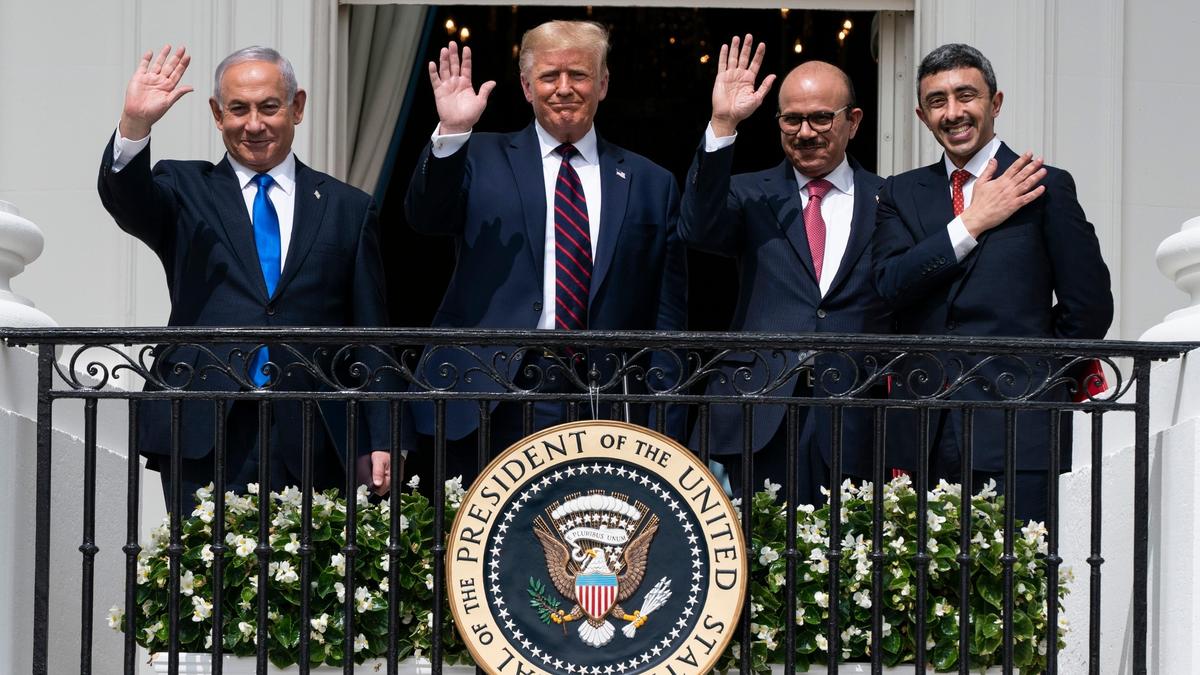
The Abraham Accords are a series of US-brokered diplomatic agreements designed to normalize relations between Israel and Arab or Muslim-majority nations, bypass the unresolved Palestinian issue, and build a unified front against Iran. Originally signed in late 2020 by the United Arab Emirates and Bahrain, the framework later expanded to include Morocco and Sudan. In late 2025, Kazakhstan formally acceded to the declaration, while the United States under a returned Trump administration made participation mandatory for any nation seeking a slice of Washington's sweeping regional de-escalation deal with Tehran.
Yet, beneath the lofty rhetoric of interfaith harmony, the framework is facing its most brutal stress test. The explosive regional war that flared between 2023 and 2025 shifted the landscape from commercial optimism to transactional survival. Despite massive public outrage across the Arab world, not a single signatory has torn up its treaty. This survival is not a testament to newfound friendship, but rather to a cold, calculated web of intelligence sharing, arms procurement, and regime security.
The Core Signatories and the Paper Backing
To understand why the framework remains intact during severe regional turbulence, one must look at the specific ledger of what each nation bought when they put pen to paper. The list of active and pending members reveals a stark divergence between economic ambitions and survival tactics.
- The United Arab Emirates: The economic engine of the framework. For Abu Dhabi, normalization was a commercial and technological calculation. By 2022, the UAE concluded a historic free trade agreement with Israel, creating half a billion dollars in trade almost immediately.
- Bahrain: A tiny island state acting with the quiet endorsement of its massive neighbor, Saudi Arabia. Manama sought an explicit security umbrella and advanced cyber defense mechanisms to protect its ruling monarchy against domestic dissent and Iranian subversion.
- Morocco: A transactional masterpiece. Rabat traded diplomatic normalization with Israel for a massive prize: explicit US recognition of Moroccan sovereignty over the disputed Western Sahara region.
- Sudan: The asterisk on the list. While Khartoum signed the general declaration in early 2021 in exchange for being removed from the US State Sponsor of Terrorism list, subsequent internal military collapse and civil war have prevented the ratification of a formal bilateral treaty.
- Kazakhstan: The late addition. Acceding in November 2025, the Central Asian nation formalized a relationship that had quietly existed for decades, signaling its alignment with Washington's broader strategic architecture.
The Secret Glue of Intelligence and Air Defense
The public was sold a vision of warm peace characterized by Israeli tourists flocking to Dubai luxury hotels and joint tech incubators. The reality is far more lethal. The real value of the agreements lies in radar screens, missile tracking, and software.
During the direct military confrontations between Israel and Iran, the silent efficacy of this network became undeniable. When Iranian drones and missiles flew across the region, tracking data flowed through a quiet pipeline that included both formal signatories like the UAE and informal participants. This defensive alignment acts as the ultimate insurance policy for Gulf monarchies terrified of regional escalation.
Security cooperation has bypassed the traditional channels of public diplomacy. Israeli defense firms have sold advanced air defense systems, radar equipment, and sophisticated surveillance tools to Morocco and the UAE. These states are not about to discard highly integrated defense systems over ideological solidarity when regional threats remain at their doorstep.
The Palestinian Red Line and the Annexation Crisis
The fundamental premise of the initial agreements was that regional integration could occur independently of the Palestinian conflict. This premise has proven to be an illusion. While Arab governments did not cut ties during the devastating war in Gaza, their political patience has worn thin.
A severe diplomatic crisis emerged regarding reported Israeli plans to annex portions of the occupied West Bank. The UAE explicitly declared annexation an absolute red line, warning that lasting peace would be impossible if the move proceeded. The diplomatic friction was exacerbated by an Israeli military strike targeting militant leaders in Doha, Qatar, which drew sharp condemnation from the Arab League.
This friction exposes the widening chasm between Arab autocrats and their citizens. Public opinion polling across the Middle East shows a massive drop in approval for normal relations with Israel. While governments maintain ties for intelligence and defense benefits, they are forced to balance this against growing domestic rage, forcing them to conduct their diplomacy via encrypted channels rather than public ceremonies.
The Coercive Push for Expansion
The United States has attempted to aggressively revive and expand the framework, tying it directly to regional peace talks with Iran. The White House issued an ultimatum to heavyweights including Saudi Arabia, Qatar, Pakistan, and Turkey, stating that normalisation with Israel is mandatory if they wish to benefit from a broader security architecture.
This heavy-handed approach has met immediate resistance. Pakistan publicly and swiftly rejected the proposal due to deep domestic political sensitivities. Saudi Arabia has maintained its position that formal recognition of Israel remains impossible without a clear, irreversible pathway toward an independent Palestinian state with East Jerusalem as its capital.
The framework is no longer expanding via enthusiastic volunteers. It has transformed into a coercive geopolitical tool used by Washington to force nations into a rigid, anti-Iran security architecture. The regional alignment is no longer about the romanticized "spirit of Abraham"; it is a cold calculation of survival, sovereign protection, and military necessity.