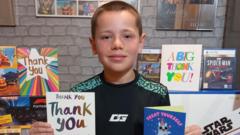
Air travel is stressful. You’ve felt it. The cramped seats, the recycled air, and that low-level hum of anxiety that hangs over every passenger before takeoff. Usually, we deal with it by staring at our phones or pretending the person in 14B isn't kicking our seat. But during a recent flight, an eight-year-old named Callum transformed a metal tube at 30,000 feet into a room full of friends.
He didn't do it with tech or fancy gadgets. He used singing and football cards.
The story started when a fellow passenger began feeling visibly distressed. Panic attacks on planes are no joke. They’re claustrophobic and isolating. While most adults did that awkward "look away and hope it stops" routine, Callum did the opposite. He leaned in. He started chatting. He shared his passion for football. When things still felt heavy, he broke into song. It wasn't just a cute moment. It was a masterclass in empathy that most grown-ups can’t pull off on their best days.
The Power of Not Overthinking Kindness
We spend a lot of time talking about "emotional intelligence" in corporate workshops. We pay thousands for seminars to learn how to connect with people. Then a kid comes along and shows us we’re making it way too hard. Callum didn't have a strategy. He saw someone hurting and decided they shouldn't be alone.
He pulled out his collection of Match Attax football cards. If you aren't familiar, these are the lifeblood of schoolyard trading. They aren't just pieces of cardboard; they're social currency. By offering to go through his deck with a struggling stranger, he shifted the focus from internal panic to external connection. It’s a classic grounding technique, though I doubt Callum called it that. He just thought the cards were cool and figured they might help.
They did.
The passenger calmed down. The tension in the surrounding rows evaporated. What could have been a miserable multi-hour ordeal turned into a viral lesson in human decency. People on the flight were so moved that they started a collection. By the time the plane touched down, this kid was showered with gifts, treats, and enough football-related swag to fill a stadium. He deserved every bit of it.
Why We Are Obsessed With These Stories
There's a reason this story blew up. It’s not just because kids are cute. It’s because we’re starved for genuine, unscripted interaction. Most of our "connections" now happen through a screen. They're curated. They're filtered. Seeing a child act on pure instinct to help a stranger reminds us of what we’ve lost in our pursuit of being "professional" and "private."
We’ve built a society where minding your own business is seen as the ultimate virtue. We wear noise-canceling headphones specifically to avoid the Callums of the world. But this incident proves that sometimes, the best thing that can happen to you is someone breaking through your bubble.
The Science of Distraction and Song
Music has a direct line to the nervous system. When Callum started singing, he wasn't just making noise. He was changing the frequency of the room. Singing regulates breathing. It stimulates the vagus nerve. For a passenger in the middle of a panic spiral, that rhythm is a lifeline.
It’s also about the cards. Tactile objects—things you can touch and flip through—help pull the brain out of a "fight or flight" response. The specific details of the football players’ stats provided a logical task for a brain that was stuck in an emotional loop. Callum accidentally stumbled upon a high-level psychological intervention because he wasn't afraid to be "annoying" or "weird."
Lessons for the Rest of Us
You don't need a pack of Premier League cards to make a difference, though it clearly doesn't hurt. The real takeaway here is about the willingness to be seen being kind. A lot of us feel the urge to help but we’re paralyzed by the fear of overstepping. We worry about what the other passengers will think. We worry we’ll say the wrong thing.
Callum didn't worry. He just acted.
This kid’s family should be proud, obviously. But the rest of us should be a little embarrassed. It took an eight-year-old to remind a plane full of adults that we’re all in this together. Whether it's a budget flight or a high-stakes office environment, the rules of engagement are the same. Look up. Notice people. Don't be afraid to share your version of "football cards."
What You Can Do Right Now
The next time you’re in a public space and you see someone struggling, don't reach for your headphones. You don't have to sing. You don't even have to talk much. Just acknowledging another person's existence can be enough to break a negative cycle.
- Put the phone down. You can't see the world if you're looking at a 6-inch screen.
- Carry a "bridge." This is something that facilitates conversation—a book, a unique keychain, or yes, even trading cards.
- Trust your gut. If someone looks like they need a distraction, they probably do.
- Stop worrying about looking cool. Cool is boring. Kindness is memorable.
Callum walked off that plane with a bag full of gifts, but the people on that flight walked off with something better. They got a reminder that the world isn't as cold as the news makes it out to be. Sometimes, all it takes is a song and a bit of paper to remind us we’re human. Keep your eyes open on your next commute. You might not be the one who needs help, but you might be the one who can give it.