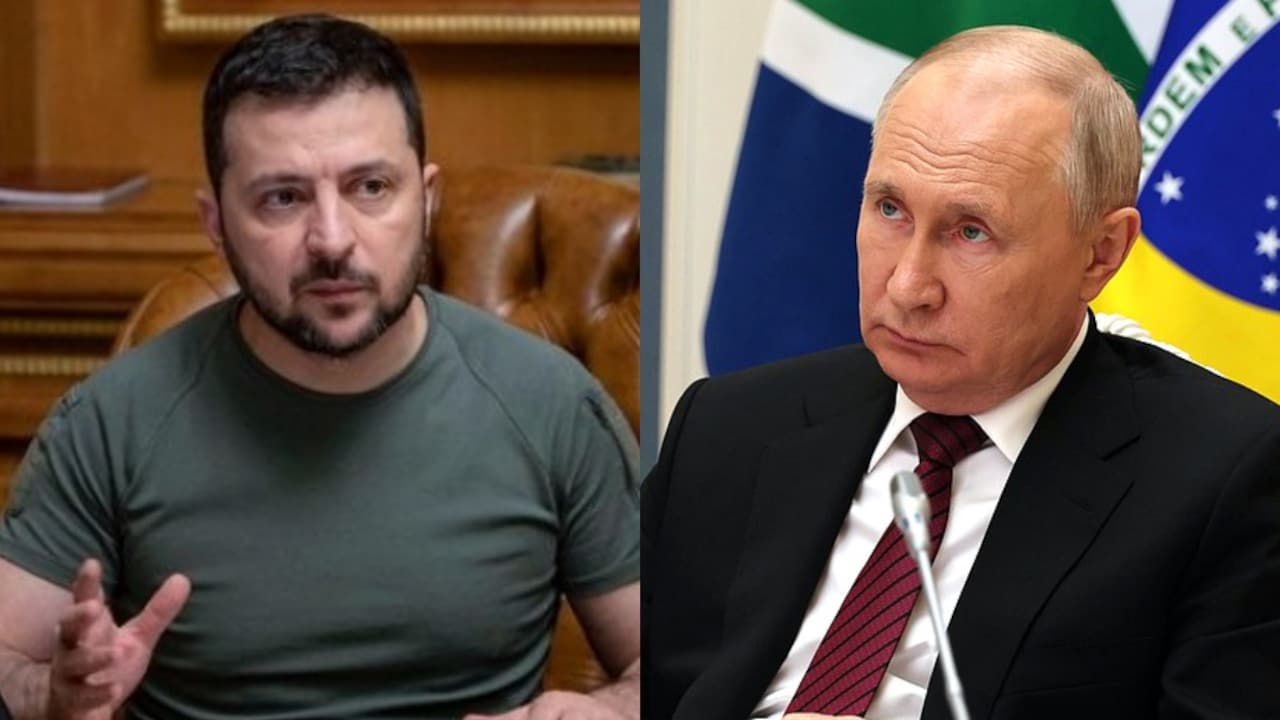
The headline screams rejection. Moscow said no to sixty days of quiet. Outrage follows on cue.
Yet the entire premise behind that headline is backward. A sixty-day ceasefire was never a serious bridge to durable peace. It was a calendar trap dressed up in diplomatic language.
When competitors run pieces built around "We Want Long-Term Peace" and treat a rejected sixty-day pause as proof of pure bad faith, they serve up the laziest consensus in geopolitical reporting. Good guys offer quiet. Bad guys reject quiet. Case closed.
Real-world conflict negotiation rarely works like a schoolyard timeout. Sixty days is an awkward length of time. It is too short to resolve territorial sovereignty, security guarantees, sanctions architecture, or domestic political survival in either Kyiv or Moscow. At the same time, sixty days is plenty long enough to reshuffle logistics, rotate exhausted troops, test western air-defense replenishment cycles, and freeze political pressure right when momentum or fatigue might shift.
Saying no to a sixty-day pause does not automatically mean a side prefers endless war. Sometimes a side says no because a short pause hands the other side free operational breathing room without settling a single core dispute.
The Lazy Consensus Around Short Ceasefires
Conventional commentary treats any ceasefire proposal as a morality test. Accept it, and you prove you want peace. Reject it, and you prove you want war.
That binary framing flatters the reader's instincts while starving them of strategic mechanics. In protracted industrial and positional warfare, timing is not neutral. Every pause has winners and losers based on what happens during the quiet window.
Consider what sixty days actually buys in modern conflict:
- Logistics and ammunition flow: Artillery shells, drones, spare parts, and repair depots move differently when active strikes pause or shift rules of engagement.
- Force rotation: Units that have held trenches or contested urban sectors for months need rest, refit, and medical recovery. A fixed two-month clock tells commanders exactly how long they have to reorganize.
- Diplomatic stalling: A temporary truce can cool urgent diplomatic pressure just enough to let negotiations drift without binding commitments on borders or oversight.
- Domestic optics: Leaders on both sides face different political clocks. A short truce can relieve immediate external pressure while leaving structural disagreements intact.
When commentators reduce a sixty-day rejection to a soundbite about "long-term peace," they confuse a tactical clock with a peace treaty. A truce is a pause in fighting. Peace is a settlement of why the fighting started and what keeps it from restarting.
Defining the Terms Before Judging the Refusal
Half the confusion around ceasefire headlines comes from sloppy vocabulary. People toss around ceasefire, armistice, frozen conflict, and peace settlement as if they sit on the same rung of a ladder. They do not.
A ceasefire is a suspension of active hostilities, often temporary, conditional, and fragile. Historically, ceasefires frequently fail or become staging grounds for the next phase of fighting.
An armistice is a formal agreement to stop fighting, usually with clearer lines and monitoring rules, yet still short of a final political resolution—the Korean Armistice Agreement of 1953 is the textbook example of fighting stopping for decades without a formal peace treaty ending the state of war.
A peace settlement addresses underlying political, legal, and security claims so neither side expects immediate resumption of large-scale force.
When a sixty-day ceasefire offer hits the table, everyone knows it is not a peace settlement. Calling a rejection a refusal of "long-term peace" conflates two completely different instruments. A party can reject a sixty-day clock precisely because it views a short, unanchored pause as a detour from whatever terms it thinks will produce a lasting settlement—or because it thinks a short pause favors the opponent's operational calendar.
To make sense of the standoff, stop asking why Moscow rejected sixty days of quiet. Ask a sharper question: who stood to gain most from a sixty-day pause, and what would have happened on Day 61?
Why "People Also Ask" Questions Miss the Real Mechanics
Readers searching around this story usually type the same handful of questions into a search bar. Most answers give polite, surface-level summaries. Let's strip the polite padding off those questions and look at what is actually going on.
Does rejecting a 60-day ceasefire prove a side has no interest in ending the war?
No. It proves a side rejected that specific mechanism under those specific conditions.
In hard-nosed negotiations, states routinely reject offers they view as tactically disadvantageous even while claiming they want an end to the conflict. Both statements can be strategically calculated rather than purely sincere. A rejection can signal a demand for different sequencing—such as binding terms first, or a different duration, or parallel concessions—rather than a literal desire for eternal combat.
Treating diplomatic rhetoric at face value is rookie analysis. Watch incentives, timing, and leverage instead of quoting press lines as gospel.
Why propose a 60-day window in the first place?
Two months sounds neat on paper. Round numbers sell well to publics and diplomats.
Practically, a fixed window creates a deadline that forces rapid diplomatic movement—or exposes who refuses to even test a pause. Proponents argue a short truce can build confidence, allow humanitarian adjustments, or create space for talks without demanding permanent concessions up front.
Critics see the flip side: a hard expiration date turns every single day of the truce into a countdown toward renewed fighting. Worse, if talks stall during those sixty days, resuming hostilities on Day 61 carries its own political shockwave.
Why is a short truce often harder to hold than people think?
Because modern battlefields are saturated with drones, sensors, artillery, and contested gray zones. Modern warfare is messy at the tactical edge.
One local drone strike, one disputed reconnaissance patrol, or one accusation of logistics movement can trigger retaliatory fire within hours. Without rock-solid verification, clear command-and-control communication, and mutual interest in holding the line, a sixty-day ceasefire can fray long before Day 60.
Lessons From Watching High-Stakes Negotiations Fail
Over years of tracking high-stakes commercial disputes, regulatory standoffs, and geopolitical crises, one pattern repeats relentlessly. Parties blow huge amounts of credibility fighting over symbolic timelines while dodging the structural trade-offs that actually decide outcomes.
I have watched negotiators spend weeks arguing over a ninety-day standstill agreement when the real deadlock sat on three unaddressed clauses: enforcement, reversion rights, and what happens the moment the clock runs out. When parties disagree fundamentally on end-state terms, a short pause often becomes a tug-of-war over preparation rather than a bridge to compromise.
Think about political scientists and historians of war who have studied negotiated settlements—scholars like Thomas Schelling on bargaining and coercion, or historians examining how twentieth-century truces either locked in stability or merely reset the clock. The recurring insight across decades of research is unglamorous: agreements hold when incentives align after the pause, not merely because someone drafted a calendar window.
Imagine a scenario where two rivals enter a sixty-day truce with zero agreement on post-truce security terms. Day 1 through Day 45 pass with tense quiet. Both sides watch satellite imagery, track supply routes, and prepare contingency plans. By Day 50, neither side trusts that Day 61 will bring a permanent deal, so both start positioning for the next phase. When the deadline hits without a breakthrough, the pause ends not in peace, but in a reset battle with fresh intelligence.
That thought experiment is not a prediction of any single event; it is a structural hazard built into short, unanchored truces.
Where This Contrarian Take Can Go Wrong
Honesty requires naming the blind spots in my own argument. Contrarianism can easily turn into clever cynicism if you push it too far.
First, rejecting a ceasefire can still be a stalling tactic used to keep pressing an advantage on the ground. Skepticism about diplomatic slogans should never blind you to actual military behavior or stated war aims. A side can cite "long-term peace" as a convenient excuse to keep fighting while hoping for better leverage later.
Second, even imperfect truces sometimes create unexpected openings. Not every ceasefire collapses on schedule. Sometimes a pause lowers temperatures, lets exhausted decision-makers hear each other differently, or creates space for quiet backchannels that public posturing blocks.
Third, dismissing short pauses entirely risks overlooking human costs. Sixty days of fewer strikes is not an abstraction to people living under fire, even if strategists treat sixty days as a blip on a multi-year timeline. Recognizing the strategic limits of a truce does not mean ignoring the human stakes of ongoing fighting.
A sharp analysis holds both truths at once: short truces carry real tactical hazards and political gamesmanship, yet they are neither pure miracles nor pure illusions.
How to Read Ceasefire Headlines Like an Insider
If you want to cut through noisy coverage around ceasefire offers and rejections, stop reading headlines as verdicts on sincerity. Read them as moves in a negotiation.
- Check the clock and the clauses. Look past the headline number of days. Ask what is frozen, what is permitted, how violations are judged, and what happens automatically when the window closes.
- Track operational incentives. Ask what each side gains or loses during a pause in terms of resupply, rotation, fortification, and diplomatic momentum.
- Separate rhetoric from leverage. Treat public claims about "long-term peace" as bargaining positions, not objective confessions. Compare what leaders say at microphones with the structural conditions they demand in private or in formal proposals.
- Watch for linkage. A serious path toward durable peace connects tactical pauses to concrete political and security mechanisms. A standalone short pause without linkage is usually a test of leverage, not a finish line.
Next time a headline declares that one side rejected peace because it turned down a sixty-day pause, look closer at the clock. Sixty days is barely enough time to unpack your bags—let alone settle a war.



