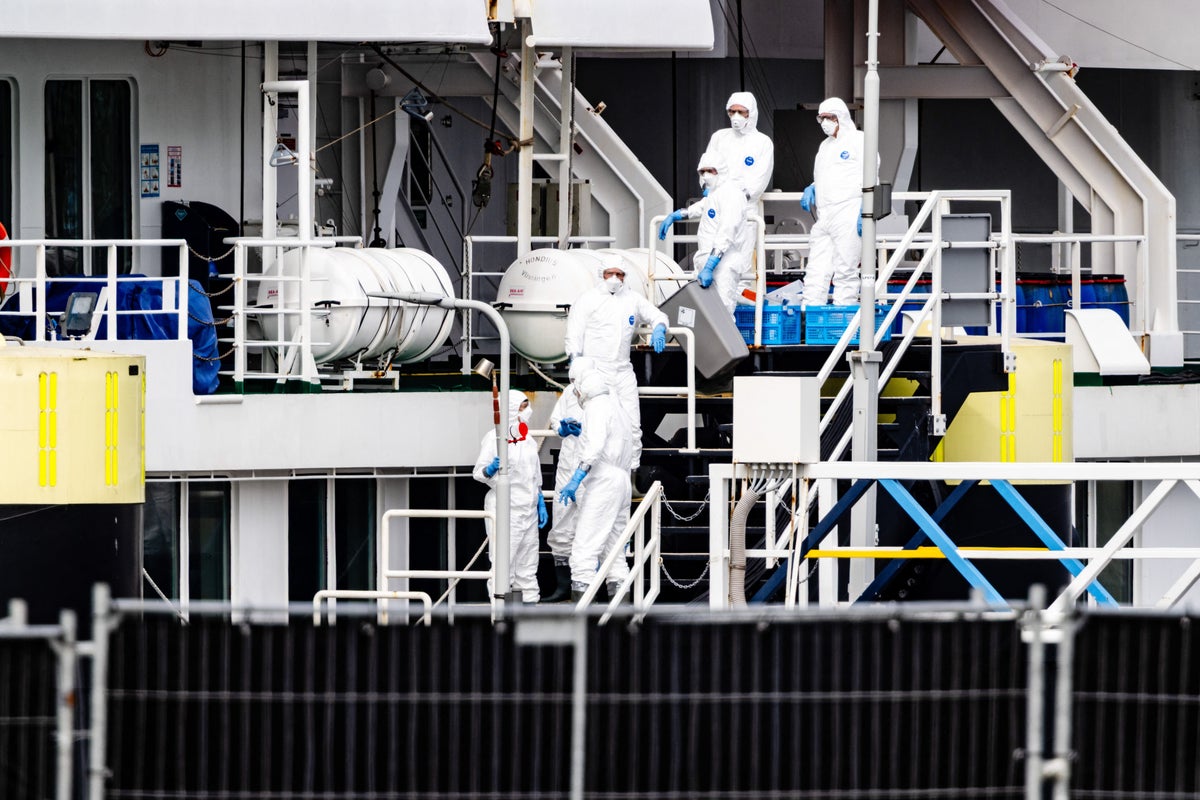
The media is currently having a collective meltdown over a cruise ship evacuated due to a handful of hantavirus cases. Headlines are screaming about a mandatory 42-day quarantine for exposed passengers, painting a picture of an impending global apocalypse trapped on a dock. It sounds terrifying. It sounds responsible.
It is also complete nonsense.
Imposing a six-week lockdown on human beings for hantavirus betrays a fundamental, embarrassing misunderstanding of basic virology and epidemiology. Public health officials are playing to the cameras, substituting rigid bureaucratized panic for actual science. If you look at how viruses actually transmit, this entire operation is not just overkill—it is a logical failure.
The Zero-Risk Illusion in Public Health
Let us look at what hantavirus actually is, rather than what sensationalized news reports want you to believe. Hantaviruses are a group of viruses carried primarily by rodents. Humans get infected through the inhalation of aerosolized urine, droppings, or saliva from infected mice and rats.
Here is the crucial fact that the mainstream coverage completely ignores: with very rare exceptions specific to certain South American strains like the Andes virus, hantaviruses do not spread from person to person.
I have spent years analyzing health crisis responses and corporate risk management. I have watched organizations torch millions of dollars chasing the wrong threat vector because they wanted to look proactive. This cruise ship scenario is that exact failure playing out on a geopolitical stage. Quarantine is a tool designed to halt human-to-human transmission chains. When you lock down hundreds of passengers who cannot pass the virus to one another, you are not protecting the public. You are conducting an expensive, authoritarian science experiment.
Dismantling the 42-Day Timeline
The justification for the 42-day window relies on the upper limit of the virus's incubation period, which typically ranges from one to eight weeks. The logic goes: "To be absolutely safe, we must hold everyone for the maximum possible duration."
This is the lazy consensus of risk mitigation. It ignores the operational reality of viral loads and symptom onset.
- The Reality of Incubation: The vast majority of hantavirus cases manifest symptoms within two to three weeks of exposure.
- The Math of Exposure: On a cruise ship, the exposure event is fixed. It happened on board, likely from a localized vector like a contaminated food storage area or HVAC component. Once passengers are off the ship, the exposure clock stops.
- The Quarantine Fallacy: Keeping healthy people cooped up together for 42 days to watch for a non-communicable disease does not stop an outbreak. It simply isolates individuals who are already either going to get sick or not.
By forcing a blanket six-week isolation, authorities are treating a rodent-borne pathogen as if it were highly communicable influenza or a novel coronavirus. It is a profound misallocation of medical resources.
People Also Ask: The Wrong Questions About Outbreaks
If you look at public forums, the questions people ask highlight how badly the media has skewed the public's understanding of health risks.
Can you catch hantavirus from another passenger?
No. Outside of specific strains in rural South America, documented human-to-human transmission is virtually nonexistent. You cannot catch it by sitting next to someone in a dining hall, shaking their hand, or breathing the same air in a quarantine facility. This reality alone invalidates the entire premise of a mass quarantine.
Why is the quarantine so long if it does not spread between humans?
Because public health departments are terrified of liability. It is much easier to defend a draconian, scientifically flawed policy that looks "tough" than to implement a nuanced, targeted monitoring strategy that requires actual work. A 42-day quarantine is institutional cover, not medicine.
The Real Cost of Institutional Panic
There is a dark side to this kind of regulatory theater. When public health agencies issue orders that defy common sense, they erode public trust.
Imagine a scenario where a passenger develops a standard, non-viral fever on day ten of isolation. In a rational world, they seek immediate care. In a world where seeking care means getting locked in a room for another month because bureaucrats panic, people hide their symptoms. Bureaucratic overreach drives the very health metrics we want to track underground.
The World Health Organization and the Centers for Disease Control and Prevention have clear guidelines on rodent control and environmental cleanup because that is how you stop hantavirus. You clean the kitchens. You trap the pests. You remediate the infrastructure. You do not imprison the victims.
The Blueprint for Rational Containment
Instead of standard, reactive protocols that accomplish nothing, a modern, data-driven response would look entirely different.
First, release the passengers immediately. They are not biohazards.
Second, implement a mandatory active surveillance protocol. Give every passenger a digital thermometer and a direct line to an epidemiological monitoring team. They check in daily. If a fever spikes, they are triaged immediately in a clinical setting equipped to handle respiratory distress.
Third, redirect the millions of dollars currently being spent on feeding, housing, and guarding healthy people in a quarantine facility toward aggressive environmental testing of the vessel itself. Find the source of the rodent infestation. Fix the engineering failure that allowed the exposure to happen in the first place.
We have to stop treating public health as a game of optics. The 42-day cruise quarantine is a monument to bureaucratic cowardice, a useless gesture that manages to violate civil liberties while contributing exactly zero to public safety. Stop applauding the lockdown and start questioning the science behind it.