Everyone on Wall Street is cheering a $17 billion marriage between DoorDash and Instacart as a brilliant consolidation play. They are dead wrong.
When two companies with fundamentally broken unit economics decide to merge, you do not get a monopoly. You get a bigger, heavier anchor.
The lazy consensus dominating the financial press right now claims this deal is about "scale," "market dominance," and "capturing the entire stomach share" of the modern consumer. Analysts love a neat narrative where number one buys number two in an adjacent vertical and magically prints cash. That narrative ignores the brutal, unforgiving math of last-mile grocery logistics.
I have spent the last decade dissecting marketplace unit economics and watching venture-backed logistics firms burn through hundreds of millions of dollars chasing phantom efficiencies. You cannot software-engineer your way out of the physical reality of moving heavy, perishable items across town for a ten-dollar delivery fee. Combining DoorDash’s hyper-local, low-basket-size restaurant courier network with Instacart’s labor-intensive, high-friction grocery picking model does not create an unstoppable juggernaut. It creates an operational nightmare disguised as corporate strategy.
The Myth of the Unified Logistics Network
The primary thesis behind a DoorDash-Instacart tie-up rests on a fundamental misunderstanding of how these two networks actually work.
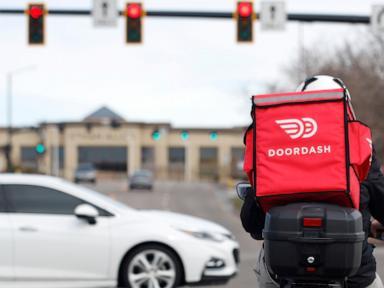
DoorDash is built on speed and density. A courier picks up a sealed bag of hot food from a counter—zero picking time—and drops it off three miles away within thirty minutes. The asset utilization relies entirely on rapid turnover. If a driver spends forty-five minutes inside a supermarket hunting down twelve specific organic produce items, substituting out-of-stock oat milk, and waiting in a checkout line, the entire dispatch algorithm collapses.
Instacart tried to solve this by separating the labor into in-store shoppers and delivery-only drivers, before largely reverting to full-service shoppers because the handoff logistics destroyed their margins.
Think about what happens when you try to smash these two models together. You are not combining two identical delivery fleets. You are merging a sprinter with a freight train.
- Basket Economics: A restaurant order averages $35 to $45 with a predictable preparation time handled by the merchant. A weekly grocery run averages $110+, spans 30 to 50 distinct SKUs, and requires the platform's labor to physically assemble the order.
- Substitution Friction: If a burger joint is out of fries, the order doesn't happen. If a grocery store is out of three ingredients for a customer's dinner recipe, the shopper spends ten unpaid minutes texting photos of shelves while the customer takes twenty minutes to reply.
- Margin Compression: Grocers operate on razor-thin net margins—often between 1% and 3%. Unlike independent restaurants, which DoorDash routinely squeezes for 15% to 30% commissions, major grocers like Kroger, Albertsons, and Walmart refuse to hand over double-digit percentages of their top-line revenue.
When analysts talk about "cross-selling" restaurant customers into weekly grocery buyers, they assume the marginal cost of acquiring and fulfilling that grocery order drops to zero. It does not. Every single grocery order still requires roughly an hour of human labor in a physical store. Scale does not shrink the size of a supermarket aisle.
Why Both Companies Are Actually Running Scared
If the operational math is so ugly, why put $17 billion on the table? Because both companies are staring down existential threats they cannot outrun alone.
Look at Instacart first. Since going public, Instacart’s core marketplace growth has stalled. Why? Because major grocers realized they were paying Instacart to steal their customer relationships. Retailers are aggressively building their own first-party digital storefronts, utilizing white-label fulfillment, and turning their physical stores into micro-fulfillment centers. Instacart saw the writing on the wall and tried to pivot into an enterprise software and advertising company via Carrot Ads. Advertising revenue has high margins, sure, but you cannot sell ad space on a digital storefront if shoppers are migrating back to the grocer's own app or walking into physical stores to escape 25% markups and service fees.
Now look at DoorDash. Tony Xu built an absolute machine in restaurant delivery, capturing over 60% of the U.S. market. Yet DoorDash faces a ceiling. Restaurant delivery is a mature, heavily penetrated category in major metro areas. To justify its valuation, DoorDash must prove it can become the default operating system for all local commerce—convenience, retail, and groceries.
DoorDash has been aggressively building its own grocery vertical from scratch, signing deals with Aldi, Sprouts, and regional chains. Buying Instacart for $17 billion is an admission that organic growth in full-basket grocery delivery is too slow, too expensive, and too hard to win against Uber Eats and Walmart+.
This is not a victory lap. It is a defensive crouch.
Dismantling the "Ad Tech" Savior Narrative
Whenever a low-margin marketplace struggles with profitability, executives point to advertising as the magic bullet. You see it with Amazon, you see it with Uber, and you certainly see it with Instacart and DoorDash.
The conventional wisdom says that combining DoorDash’s massive daily active user base with Instacart’s CPG (Consumer Packaged Goods) advertising network will create a retail media powerhouse capable of printing pure profit.
Let's test that theory.
CPG brands—think Procter & Gamble, Unilever, Coca-Cola—spend billions on retail media because they want to influence point-of-sale decisions for staple goods. That works brilliantly when a shopper is browsing a digital supermarket aisle for a weekly restock. It works terribly when a hungry user opens an app at 7:30 PM on a Tuesday to order Thai food.
Intent matters. You cannot force CPG ad spend onto a high-intent, immediate-consumption food app without ruining the user experience and tanking conversion rates. Furthermore, CPG brands are already suffering from retail media fatigue. They are being forced to pay an ad tax to Walmart Connect, Kroger Precision Marketing, Target Roundel, and Amazon. A combined DoorDash-Instacart entity does not suddenly unlock new marketing budgets; it just fights for scraps from the same finite pool of trade spend while grocers actively try to disintermediate them.
What People Are Getting Wrong About Antitrust and Monopoly Power
Ask any casual observer about a $17 billion DoorDash-Instacart deal, and their immediate reaction is predictable: "Won't the FTC block this? Won't it just make delivery fees even higher for consumers?"
Both questions miss the real competitive dynamics at play.
First, looking at antitrust purely through the lens of third-party delivery apps is outdated. Regulators who block this deal on the grounds of "eliminating competition" are fighting the last war. The real competition for Instacart and DoorDash isn't each other. It is Walmart, Amazon, and Target.
Walmart controls roughly a quarter of the entire U.S. grocery market. They own the inventory, they own the real estate, they own the supply chain, and with Walmart+, they subsidize last-mile delivery using massive retail profits. Amazon owns Whole Foods, operates Amazon Fresh, and uses Prime as the ultimate customer lock-in mechanism.
Third-party middlemen like DoorDash and Instacart are fighting a two-front war against vertically integrated giants that do not need to make a profit on the delivery leg of the transaction. Even if the FTC waves a $17 billion merger through, the combined company still possesses zero pricing power against Walmart.
Second, regarding consumer fees: they cannot go much higher because consumer price elasticity has already snapped.
A $40 grocery order on these platforms routinely balloons to $62 after item markups, service fees, delivery fees, regulatory response fees, and driver tips. Consumers are not stupid. During the zero-interest-rate era, subsidized delivery felt like a luxury everyone could afford. Today, with cumulative food inflation squeezing household budgets, consumers are voting with their feet—either by driving to the store themselves or by choosing curbside pickup, which eliminates the most expensive part of the equation: the last-mile driver.
The Brutal Reality of Integration
Suppose the deal closes. Regulatory hurdles are cleared, shareholders sign off, and the press releases celebrate a new era of local commerce. What happens on Day One?
Culture clashes and technical debt.
DoorDash operates with a notoriously relentless, execution-obsessed, engineering-first culture. It is a company built on ruthless operational efficiency and granular unit-level tracking. Instacart, conversely, has spent years navigating identity crises—shifting from a pure marketplace to a white-label enterprise tech vendor, then to an ad network, burdened by legacy systems and bloated operational layers from its hyper-growth pandemic years.
Merging two massive, real-time logistics dispatch engines is like trying to swap the engines on a commercial airliner mid-flight. You have two separate driver apps, two distinct merchant portals, conflicting merchant contracts, and overlapping geographic footprints where couriers will be pitted against each other for the same routes.
Imagine a scenario where a major regional grocer has an exclusive, deeply integrated enterprise contract with Instacart, while simultaneously running a high-margin storefront on DoorDash. Suddenly, both platforms are owned by the same parent company. The grocer immediately realizes their leverage has evaporated—and their first phone call won't be to celebrate synergy. It will be to their legal team and to Uber Eats to diversify their risk.
The Contrarian Playbook: What Actually Works in Last-Mile Delivery
I will admit the flaw in my own critique: doing nothing is also a slow death sentence for standalone delivery apps. If you are sitting in the C-suite of a third-party logistics marketplace right now, standing still means getting crushed by Walmart on one side and driver labor regulations on the other.
However, spending $17 billion to buy more of the exact same low-margin volume is the wrong answer. If these companies actually want to build durable, high-margin businesses, they need to stop chasing bloated horizontal consolidation and execute three ruthless pivots instead.
1. Kill the "Everything Store" Fantasy
Stop trying to deliver 50-item weekly grocery shops via gig workers. The math will never work without gouging the customer or starving the driver. Instead, double down on high-margin, immediate-need micro-fulfillment. Convenience items, pharmacy runs, alcohol, pet supplies, and emergency dinner ingredients (baskets under 10 items) fit the rapid-dispatch courier model. Leave the heavy lifting of weekly pantry restocking to automated warehouses and curbside pickup.
2. Become Infrastructure, Not a Destination
Instead of fighting retailers for ownership of the customer, surrender the front-end relationship entirely and dominate the backend logistics pipes. DoorDash Drive and Uber Direct—the white-label delivery services that power deliveries ordered directly through a merchant’s own app—are vastly superior businesses to consumer marketplaces. There is zero customer acquisition cost, zero customer support overhead for missing items, and predictable B2B contract revenue. Own the plumbing, stop fighting over the storefront.
3. Build Dark Stores in High-Density Zones
If you want grocery margins, you have to own the inventory. Period. As long as DoorDash and Instacart act as parasitic middlemen scraping fees off a supermarket's existing retail prices, they are capped by the grocer's own thin margins. Deploying capital into automated, micro-fulfillment dark stores in dense urban zip codes—stocking only the top 3,000 fastest-moving SKUs—allows a platform to capture wholesale-to-retail margins while cutting picking times from forty minutes down to three minutes.
Stop Confusing Size With Strength
Wall Street loves big numbers because big numbers generate massive investment banking fees and easy headlines. A $17 billion buyout sounds decisive, bold, and transformative.
In reality, it is financial engineering masquerading as operational strategy.
You cannot fix a leaky bucket by welding it to another leaky bucket. Until third-party delivery platforms solve the fundamental physics of moving physical goods without burning human capital and consumer goodwill, no amount of M&A will save their margins. When the dust settles on this mega-deal, the combined company won't own the future of commerce—it will just own a much larger pile of the exact same problems.