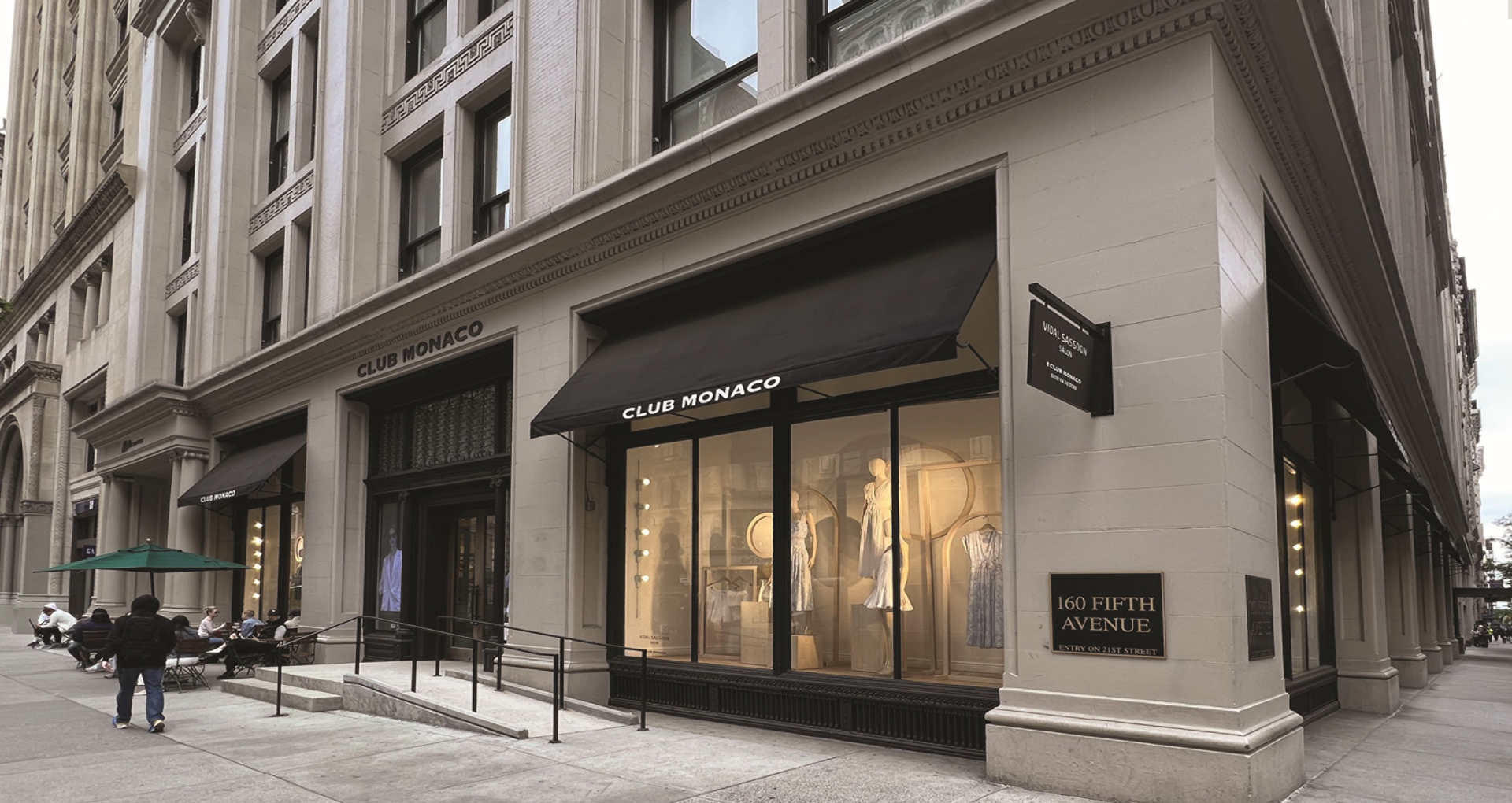
Walk down Fifth Avenue toward the Flatiron Building and you'll see it. 160 Fifth Avenue. It doesn't scream for attention like some of the glass-and-steel monstrosities further uptown. It doesn't have to. Built in the early 1890s, this nine-story beauty has seen New York change from a city of horses and carriages to a tech hub where people pay fifteen dollars for a piece of avocado toast. Honestly, it's one of those buildings that makes you stop and look up, even if you’re a cynical New Yorker in a rush to catch the R train.
Designed by the firm Robert Maynicke—who was basically the king of loft buildings back then—160 Fifth Avenue represents the Gilded Age's obsession with looking toward Italy for inspiration. We’re talking about the Neo-Renaissance style. It has these massive arched windows and intricate terracotta details that look like they were carved by a master craftsman who took way too much pride in his work. Today, it’s managed by RFR Realty, and while the inside has been gutted and turned into high-end office space, the soul of the place remains firmly rooted in 1892.
The Architecture is More Than Just "Old"
If you look at the facade, you’ll see some of the most impressive stonework in the district. It’s got that classic tripartite composition. That’s a fancy way of saying it’s built like a Greek column: a base, a shaft, and a capital. The first two floors act as the base, featuring large storefront windows that have housed everything from luxury retailers to high-end showrooms.
But it’s the upper floors that really do the heavy lifting. The limestone and brick blend together in a way that feels sturdy. Permanent. Unlike the flimsy-looking towers we see popping up in Hudson Yards, 160 Fifth Avenue feels like it could survive an apocalypse. The windows are deep-set. This creates shadows that change throughout the day, giving the building a "mood" that shift based on whether the sun is hitting it from the east or the west. It's subtle. You might not notice it if you’re just staring at your phone, but it’s there.
Why Tech Companies Fell in Love With It
For a long time, these types of buildings were just dusty warehouses or places for the garment trade. Then the "Silicon Alley" boom happened. Suddenly, every tech startup in the world wanted high ceilings and exposed brick. 160 Fifth Avenue was perfectly positioned. It sits right at the corner of 21st Street, basically the heart of the Flatiron District.
Adobe is one of the big names that famously took up residence here. Think about that for a second. One of the most advanced software companies in the world chose a building from the 19th century to house its creative teams. It makes sense, though. Creative people don't want to work in cubicles under buzzing fluorescent lights. They want the 14-foot ceilings and the massive windows that 160 Fifth Avenue offers. They want to feel like they’re part of the city’s history while they’re coding the future.
The floor plates are roughly 15,000 square feet. In the world of Manhattan real estate, that’s a "boutique" feel. It’s large enough for a decent-sized company but small enough that you don’t feel like a cog in a giant machine. When RFR renovated the building, they didn't just slap a coat of paint on it. They upgraded the mechanical systems, put in new elevators, and made sure the fiber-optic capabilities could handle the massive data loads that companies like Adobe require. It’s a bit of a "mullet" building: business and history on the outside, high-speed party on the inside.
The Neighborhood Factor
You can't talk about 160 Fifth Avenue without talking about where it sits. You are steps away from Madison Square Park. That means you're close to the original Shake Shack, which, let's be honest, still has a line that is way too long. But more importantly, you’re in a transit-rich environment. The 4, 5, 6, N, Q, R, W, and F trains are all within a five-minute walk. For an employer, that is gold.
- Dining: You have Eataly right there for when you want to pretend you're in Rome during your lunch break.
- Retail: The neighborhood is a mix of high-end furniture stores like Restoration Hardware and athletic brands like Lululemon.
- Atmosphere: It’s busy, but it’s not Times Square "I want to scream" busy. It’s more of a "I’m a successful professional" busy.
One of the misconceptions about this area is that it's just for tourists. Not true. While the Flatiron Building (just a block away) attracts the selfie sticks, 160 Fifth Avenue is where the actual work gets done. It’s a commercial hub that feels lived-in.
The Survival of the Landmark
New York is notorious for tearing things down. We lost the original Penn Station, which was a crime against humanity. But 160 Fifth Avenue survived. It’s part of the Ladies' Mile Historic District. This designation is huge. It means the Landmarks Preservation Commission (LPC) has a say in what happens to the exterior. You can’t just go and replace the mahogany-framed windows with cheap aluminum ones.
This preservation adds a layer of "prestige" value that you can’t manufacture. When a client walks into a meeting at 160 Fifth Avenue, they aren't walking into a generic lobby. They are walking into a piece of New York’s architectural lineage. The building has a weight to it. A gravitas. It tells people that your company isn't some fly-by-night operation that's going to disappear in six months.
Modern Realities: What It’s Like Inside Today
If you were to walk into the offices today, you’d see a lot of "open plan" layouts. It's very collaborative. Because the building was originally designed for manufacturing and lofts, the structural columns are spaced in a way that allows for huge, sweeping work areas. You don't have these tiny, cramped offices.
The light is the real winner here. Because it’s a corner building, you get double exposure. The light floods in from the south and the west. In the winter, when New York gets that gloomy, grey overcast look, the windows at 160 Fifth Avenue still manage to catch whatever stray photons are floating around. It makes a massive difference for employee morale. No one wants to work in a cave.
RFR Realty has kept the lobby looking sharp. It’s modern but pays homage to the building’s roots. It isn't over-the-top. It’s sophisticated. Think marble, clean lines, and high-end lighting. It’s the kind of place where you feel like you should probably straighten your tie or fix your hair before you walk in.
The "Ladies' Mile" Context
To really understand why 160 Fifth Avenue is important, you have to understand the Ladies' Mile. In the late 19th century, this was the premier shopping district in the country. This was where the wealthy elite—the Astors, the Vanderbilts—came to spend their money. 160 Fifth Avenue was right in the thick of it.
Back then, the building might have housed publishers or high-end apparel wholesalers. The fact that it has transitioned so seamlessly from the garment age to the digital age is a testament to Maynicke’s design. He built things to last. He used high-quality materials. He didn't cut corners.
What You Need to Know if You’re Looking for Space
Finding an opening at 160 Fifth Avenue is tough. It’s a high-occupancy building because, frankly, once companies get in, they don't want to leave. But if you are looking for office space in the Flatiron District, here’s the reality:
- Pricing: It’s not cheap. You’re paying for the location and the architecture. Expect "Class A" pricing even though it’s a historic building.
- Infrastructure: Don't let the old stone fool you. The tech backbone is top-tier. Most floors have been fully modernized with HVAC and high-speed data.
- Vibe: It’s professional but creative. It’s not the "suit and tie" vibe of Park Avenue, but it’s not the "startup in a garage" vibe of Bushwick either.
Honestly, the building is sort of a bridge. It connects the history of New York commerce with the modern world. It’s a survivor.
Actionable Next Steps for Visitors and Professionals
If you’re interested in 160 Fifth Avenue, whether as a fan of architecture or someone looking for a place to park their business, here is how you should approach it:
- For the Architecture Nerd: Take a walk starting at 23rd Street and head south. Compare 160 Fifth to the Flatiron Building. Notice the terracotta work on 160—it’s actually more intricate than its more famous neighbor in some spots. Look at the way the arches on the top floors mirror the windows on the lower levels.
- For the Business Owner: Reach out to RFR Realty directly. They manage the property and usually have the most up-to-date info on lease expirations. Don't wait for a listing to hit the public markets; in this neighborhood, the best spaces are often gone before the ink is dry on the flyer.
- For the Local: Use the building as a landmark. It’s a great meeting spot because everyone knows the corner of 21st and 5th. Grab a coffee at one of the nearby spots like Devoción and just sit in the park for a minute. Looking at buildings like 160 Fifth is a reminder that New York was built to be grand.
160 Fifth Avenue isn't just an address. It’s a statement about what New York used to be and what it manages to stay: a place where style and substance actually meet. It has survived economic crashes, world wars, and the rise of the internet. It’ll probably be standing there, looking just as good, in another hundred years.