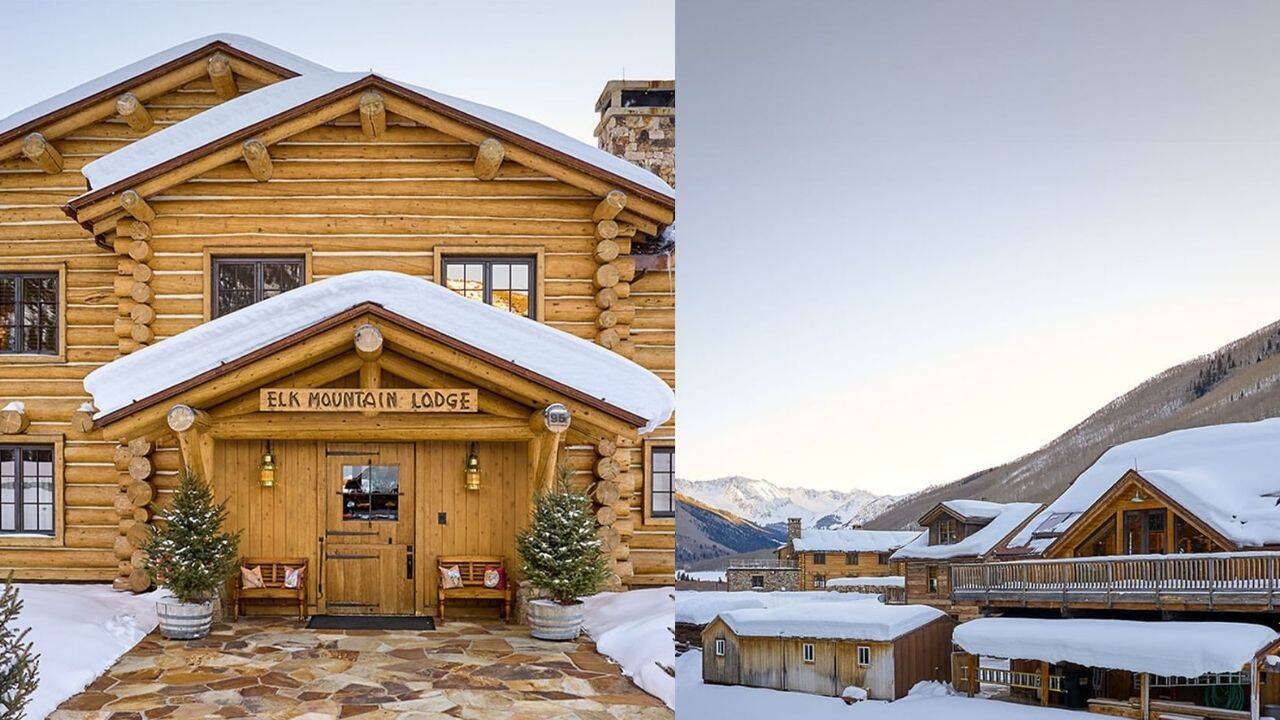
Billionaire William "Bill" Koch’s 52-acre Aspen estate recently cleared an auction block for $33.515 million, a crushing 73 percent drop from the $125 million figure blazoned across real estate headlines.
That single transaction exposes the speculative theater driving the highest echelon of American real estate. For nearly two decades, ultra-high-net-worth sellers and elite brokerages have engaged in a game of pricing chicken, slapping nine-figure valuation tags on legacy compounds to capture media buzz and anchor expectations.
The market has finally blinked.
The Anatomy of an Anchoring Strategy
To understand how an estate drops $91.5 million in perceived value without a single log shifting on its foundation, one must understand how elite mountain real estate is priced. It is rarely based on traditional appraisal models like comparable sales or price-per-square-foot metrics. Instead, it relies heavily on behavioral psychology—specifically, cognitive anchoring.
Koch acquired the Castle Creek Valley property, known as Elk Mountain Lodge, in 2007 for $26.5 million. The site, a former commercial venue, was converted into a massive 25,000-square-foot private compound comprising a primary lodge, seven guest cabins, and extensive infrastructure. Over the years, Koch tested the market's limits multiple times:
- 2015: First listed for $100 million before being reduced to $80 million.
- 2020: Offloaded a 31-acre parcel for $14.5 million, adjusting the footprint to 52 acres.
- 2025: Re-emerged on the market with an eye-popping $125 million tag—the highest asking price in Colorado history at the time.
- Late 2025: Cut by $26 million to $99 million after months of cold silence from potential buyers.
- 2026: Moved to an unreserved luxury auction, resulting in the final $33.515 million hammer price.
The initial $125 million list price was never a reflection of true underlying property liquidity. It was a marketing megaphone. By anchoring the estate at nine figures, the listing generated global news coverage, framed the property as an irreplaceable trophy asset, and signaled to the world that only a tiny fraction of global billionaires need apply.
When the market refused to digest that valuation, subsequent price cuts appeared to present a discount, even though the estate was still priced drastically above historical acquisition costs.
Why Legacy Compounds Struggle at Nine Figures
The crash of Elk Mountain Lodge reveals a fundamental structural flaw in mega-compounds. Buyers at this level are not looking for someone else's customized vision of paradise.
Ultra-wealthy individuals buying in Aspen fall into distinct profiles. Tech founders, hedge fund managers, and international industrialists generally prefer modern architectural statements with floor-to-ceiling glass, integrated smart systems, and tight proximity to downtown Red Mountain or Willoughby Way.
Elk Mountain Lodge, by contrast, offered a distinctly rustic aesthetic: 30-foot log ceilings, antler chandeliers, and heavy timber construction across eight separate buildings.
                     ELK MOUNTAIN LODGE VALUATION TIMELINE

  $125M ------------------------------------------------ (Jan 2025 Peak)
         \
          \
   $99M ---*-------------------------------------------- (Dec 2025 Price Cut)
            \
             \
  $33.5M -----*----------------------------------------- (July 2026 Final Auction)
               \
  $26.5M -------*--------------------------------------- (2007 Purchase Price)
Maintaining a 25,000-square-foot, multi-building compound 11 miles outside of downtown Aspen carries immense operational friction. Groundskeeping, snow removal, security, heating, and property maintenance on an eight-structure estate can easily run seven figures annually.
A buyer spending $100 million or more usually wants a turnkey compound that reflects modern aesthetic sensibilities, not a sprawling 1990s-era dude ranch that requires a full staff just to keep the pipes from freezing in January.
The property was simply too custom, too rustic, and too far from town to justify a record-breaking valuation, regardless of who owned it.
The Myth of Unbounded Aspen Real Estate
For years, developers and high-net-worth sellers operated under the assumption that Aspen real estate was completely immune to broader financial gravity. The market undoubtedly saw unprecedented post-2020 surges, with median single-family home prices eclipsing $13 million and trophy assets like Palantir CEO Alex Karp’s $120 million purchase proving that nine-figure capital exists for the right property.
However, the auction of Koch's estate draws a hard boundary line between what the market actually values and what sellers merely hope to extract.
When a luxury property goes to an unreserved auction, the cloak of speculative pricing disappears. The market speaks without marketing fluff or brokerage optics.
At $33.515 million, the market calculated the actual intrinsic value of 52 acres in Castle Creek Valley, accounting for the heavy capital expenditure required to modernize or redevelop an aging compound. Subtract the cost of land and infrastructure, and the final sale price sits remarkably close to Koch’s original $26.5 million buy-in back in 2007 when adjusted for inflation.
Two decades of aggressive luxury appreciation, erased in a single afternoon of bidding.
What This Sale Means for the Ultra-Luxury Market
The resolution of the Elk Mountain Lodge listing sends a clear signal to legacy owners trying to capitalize on Aspen's prestige. The era of arbitrarily throwing $100M+ prices at trophy properties and waiting for a desperate billionaire is winding down.
Buyers in the ultra-luxury bracket are increasingly analytical. They utilize private family offices, independent risk managers, and real estate advisory teams who actively analyze long-term holding costs, spatial efficiency, and re-sale liquidity. A high asking price is no longer enough to manufacture prestige; without alignment in architecture, location, and usability, speculative pricing collapses under market exposure.
Bill Koch didn't lose money on paper—he bought at $26.5 million and sold at $33.5 million. But the distance between his $125 million dream price and the reality of the market exposes a growing gap between seller hubris and actual buyer demand in America's most expensive mountain town.
When the hype is stripped away, a home is only worth what someone will write a check for on auction day.