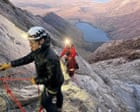
A stranded climber clinging to a six-inch shelf of rock over 10,000 feet above sea level in the Sierra Nevada range highlights a persistent structural crisis in high-altitude emergency response. When an experienced mountaineer took a false step on Laurel Mountain's Mendenhall Couloir, he joined a swelling statistic of backcountry users who push emergency systems to their absolute breaking points. High winds grounded the helicopter option immediately. That left the Mono County Search and Rescue team with one terrifying choice: climb up into pitch-black alpine terrain on foot, relying on headlamps and pure trust to pull a freezing man from the abyss.
The operation succeeded, but it underscores a dangerous reliance on volunteer squads operating under mounting physical and financial strain. You might also find this similar coverage interesting: Why White House Construction Caused That Close Call With Trump's Helicopter.
The Calculus of Vertical Exposure
Laurel Mountain is not a casual day hike. Rising steeply above the Owens Valley, its gullies feature shifting, destabilized rock structures that reward minor navigational errors with catastrophic consequences. When the climber veered off the undocumented path, he found himself trapped on a ledge with thousands of feet of sheer vertical exposure beneath him.
Leg cramps set in early. Alternating weight between stiffening limbs on a razor-thin strip of stone is a psychological crucible. As reported in latest reports by Associated Press, the results are widespread.
[Mendenhall Couloir Route] -> [Navigational Deviation] -> [6-Inch Ledge Trap] -> [No-Fly Wind Conditions] -> [Night Foot Ascent Required]
Without immediate intervention, muscle failure meant an inevitable fatal plunge. Search units spent two agonizing hours hunting for the subject in the dark before a faint voice cut through the mountain wind.
This is the reality of modern wilderness emergencies. The public pictures a sleek, mechanized rescue apparatus ready to drop from the clouds at a moment's notice. The truth involves freezing volunteers navigating unnavigable terrain by the narrow beam of a headlamp because technology hits a hard ceiling when severe weather rolls in.
The Volunteer Backbone Under Siege
Most people assume mountain rescue is a salaried public service funded by state taxes. It is not. Teams like the one deployed in Mono County rely heavily on specialized volunteers who donate their time, risk their lives, and often purchase their own technical gear.
When a rescue stretches into the dead of night, the risks multiply exponentially.
- Terrain that is manageable during daylight transforms into a lethal maze after sunset.
- Rotor-wing aircraft become useless debris-magnets when high alpine winds gust violently.
- Rescuers must double as rope-riggers, medics, and psychological anchors for panicked subjects.
Every time a climber steps off-route, they borrow against a safety margin maintained by unpaid citizens. These squads are facing an unprecedented surge in call volumes as outdoor recreation spikes year over year. The infrastructure protecting the American backcountry was built for an era of fewer visitors and lower impact. Today, it strains under the weight of year-round high-risk tourism.
The Cost of Unforgiving Terrain
Accidents happen even to the prepared. The climber on Laurel Mountain was not a novice stumbling out of a sedan in sneakers; he was experienced. Yet the Sierra Nevada does not care about past summits or technical competence. Granite fractures. Couloirs channel falling debris. Temperatures plunge past freezing the moment the sun drops behind the ridge.
The operational decision to go in on foot rather than wait for morning daylight saved a life, but it exposed the rescue team to unacceptable levels of cumulative hazard. Leaving a man on a six-inch ledge overnight with cramping legs was mathematically equivalent to signing a death warrant. Rescuers had to move. They trusted each other's foot placement on loose scree in total darkness because the alternative was unthinkable.
As search and rescue groups absorb more missions with flatlined budgets and shrinking headcounts, the model bends closer to snapping. The next midnight ascent on a vertical wall might not end with a successful rope-rig overhead. Until funding models shift to match the soaring popularity of extreme backcountry recreation, the safety of thousands of climbers rests entirely on the midnight courage of a few exhausted locals.