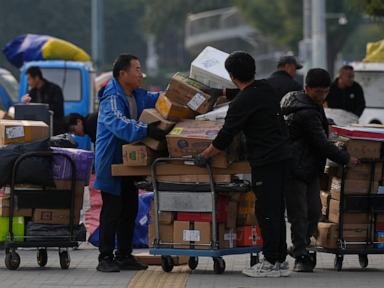
China’s nearly $1 trillion goods trade surplus is not a sign of unstoppable economic dominance. It is an alarm bell. A trade surplus of that magnitude exposes severe domestic weakness, proving that Chinese households and businesses are too cash-strapped to buy imports while state-subsidized factories dump excess capacity onto global markets at razor-thin margins. Instead of fueling sustainable prosperity, this massive imbalance triggers retaliatory tariffs abroad, starves local service sectors of capital, and traps the world’s second-largest economy in a deflationary loop that Beijing cannot easily escape.
For decades, Wall Street and financial press rooms treated trade surpluses like corporate profit margins. Big number up, economy strong. That shorthand fails completely when applied to modern macroeconomics, and nowhere is that failure more obvious than in Beijing’s recent customs data. When a nation exports vastly more than it imports, it is effectively shipping real physical wealth—steel, electric vehicles, solar panels, consumer electronics—abroad in exchange for paper IOUs and foreign currency reserves. Meanwhile, its own citizens go without. In related news, read about: What Happens to Washington Tech Policy When Nvidia CEO Jensen Huang Faces Personal Scandal.
The Anatomy of an Imbalance
A trade surplus is a simple mathematical equation. Exports minus imports. When that gap balloons toward the trillion-dollar mark, there are only two possible explanations. Either the country has invented miraculous technologies that the rest of the world cannot live without at any price, or domestic demand has collapsed so severely that the country stopped buying things from abroad.
China is experiencing a volatile mix of both, heavily tilted toward the latter. The Economist has also covered this critical issue in great detail.
Following the multi-year implosion of its massive property sector, household wealth across Chinese cities evaporated. Real estate historically accounted for roughly seventy percent of Chinese family assets. When apartment prices fell and developers defaulted, ordinary families did what rational people always do during a balance-sheet recession. They stopped spending and started hoarding cash.
Because consumers stopped buying, domestic factories suddenly had warehouses full of unsold goods. Rather than letting those factories go bankrupt—which would trigger mass layoffs and social instability—state-owned banks kept extending cheap credit to industrial manufacturers. Supply-side stimulus became the default policy setting in Beijing. Factories kept running twenty-four hours a day, churning out more goods than the domestic market could ever absorb.
The only release valve left was the global export market.
The Deflationary Export Trap
Walk down the docks of Shenzhen or Ningbo, and the sheer scale of outward-bound container traffic looks like an economic miracle. Look at the balance sheets of the companies filling those containers, and a very different picture emerges.
To clear out domestic overcapacity, Chinese manufacturers have engaged in brutal price wars. In sectors ranging from lithium-ion batteries to basic industrial chemicals, producer prices have been falling for months on end. When domestic profit margins hit zero, exporters slash prices further to capture market share in Southeast Asia, Latin America, and Europe.
Consider a hypothetical example of how this plays out on a factory floor in Guangdong. Suppose a mid-sized appliance manufacturer produces one million air conditioners a year, but domestic orders drop by thirty percent due to the housing slump. Shutting down an assembly line costs millions in fixed overhead and invites scrutiny from local party officials obsessed with regional GDP targets. So the factory owner keeps the line running, sells the extra three hundred thousand units to distributors in Brazil and Germany at a two percent loss, and relies on local government tax rebates and cheap state bank loans to stay solvent.
Multiply that hypothetical factory by fifty thousand enterprises across China’s coastal provinces. You get a record-breaking trade surplus built on profitless volume.
Why Foreign Markets Are Slamming the Door
No trading partner on earth can absorb a trillion-dollar structural surplus without suffering severe industrial displacement. We saw this movie once before during the early 2000s, a period economists grimly dubbed the China Shock, when rapid Chinese export growth hollowed out manufacturing towns across the American Midwest and Northern Europe.
Politicians in Washington, Brussels, and emerging capitals have zero appetite for a sequel.
The global backlash is already hardening into permanent trade architecture. The United States has slapped triple-digit tariffs on Chinese electric vehicles and steep duties on solar cells, steel, and semiconductors. The European Union followed suit with countervailing duties on battery-powered cars after investigating state subsidies. Even developing economies—nations Beijing relies on for diplomatic support—are raising the drawbridges. Brazil, India, Turkey, and Indonesia have all launched anti-dumping investigations or imposed fresh tariffs on Chinese steel, textiles, and ceramics to protect their own nascent factories from being wiped out by below-cost imports.
A trade surplus this size eventually destroys its own foundation. Every container ship leaving Shanghai loaded with discounted goods carries the political ammunition that foreign lawmakers use to justify new trade barriers. By relying on exports to compensate for weak domestic consumption, Beijing is accelerating the fragmentation of the global trading system it needs to survive.
The Currency Conundrum and Capital Flight
Traditional economic theory suggests that a massive trade surplus should automatically correct itself. When foreign buyers purchase huge amounts of Chinese goods, they must buy Chinese yuan to pay for them. That surging demand should push the value of the yuan higher, making Chinese exports more expensive and foreign imports cheaper until trade balances out.
That self-correcting mechanism is broken in China.
Despite pulling in hundreds of billions of dollars in trade receipts, the yuan has faced persistent downward pressure against the US dollar. Where is all that export cash going? Much of it is quietly leaking out of the country or sitting offshore.
Exporters, acutely aware that domestic interest rates are low and investment returns inside China are bleak, are reluctant to convert their dollar earnings back into yuan. Instead, they park those dollars in offshore bank accounts, Hong Kong deposits, or foreign dollar-denominated assets where yields are higher and capital controls cannot trap their money. At the same time, foreign institutional investors have pulled billions out of Chinese equities and bonds, while wealthy Chinese citizens use every legal and gray-market channel available to move savings abroad.
This dynamic creates an acute headache for the People’s Bank of China. If the central bank lets the yuan fall too fast to help exporters, it triggers panic and accelerates capital flight. If it burns through reserves to prop up the currency, it tightens financial conditions at home and makes Chinese exports less competitive against rivals in Vietnam, Mexico, and India. The central bank is trapped in a policy vise, forced to manage an exchange rate that no longer reflects the underlying trade numbers.
The Hollowing Out of Domestic Services
Obsessing over industrial output and trade surpluses carries a steep opportunity cost. Every yuan of subsidized credit funneled into building another automated factory or chemical plant is a yuan denied to the service sector, healthcare, education, and household social safety nets.
Modern, wealthy economies do not run on endless factory expansion. They run on domestic consumption and high-value services. In the United States, household consumption accounts for roughly sixty-eight percent of GDP. Across the European Union, it hovers around fifty-two percent. In China, household consumption struggles to reach forty percent of GDP—one of the lowest ratios of any major economy in modern history.
The reasons are structural and deeply ingrained in how the Chinese state taxes and spends. China maintains a remarkably thin social safety net relative to its per-capita income. Rural migrant workers—the backbone of the urban workforce—still face severe restrictions under the hukou household registration system, which limits their access to public healthcare, pensions, and urban schools for their children. Because healthcare emergencies or retirement can wipe out a family’s life savings overnight, Chinese households maintain one of the highest precautionary savings rates in the world.
Instead of fixing this by transferring wealth directly to citizens through robust pensions, unemployment insurance, or direct fiscal stimulus, policymakers repeatedly fall back on what they know best. Building things.
Infrastructure and manufacturing projects produce immediate, measurable boosts to industrial output statistics. Giving money to ordinary people feels messy and uncontrollable to central planners, who worry that citizens might simply save the cash or spend it on imported luxuries rather than domestic goods. Yet by refusing to empower the consumer, the state guarantees that domestic demand remains anemic, ensuring the country stays addicted to foreign buyers.
Historical Echoes of Over-Reliance
Economic history offers harsh warnings for nations that mistake export dominance for comprehensive strength.
In the late 1980s, Japan posted staggering trade surpluses that terrified Western competitors and sparked fierce trade wars with Washington. Japanese automakers and electronics giants seemed invincible. Yet beneath the surface, excess liquidity and an export-obsessed growth model inflated one of the largest real estate and stock market bubbles in history. When that bubble burst in 1991, Japan’s inability to pivot quickly toward domestic-led consumption ushered in three decades of stagnation and deflation.
Germany offers a more recent cautionary tale. For twenty years after the introduction of the euro, Germany built an export juggernaut based on cheap Russian energy, precision engineering, and insatiable Chinese demand for German machinery and luxury cars. Berlin celebrated balanced budgets and massive trade surpluses while underinvesting in domestic digital infrastructure, energy transition, and consumer demand. When energy prices spiked and China began making its own cars and machines, Germany’s export engine stalled, leaving Europe’s largest economy mired in industrial contraction.
China faces a far steeper climb than either Japan or Germany ever did. Both Japan and Germany grew rich before their demographic curves turned ugly and their export models hit a wall. China is hitting its structural ceiling while its per-capita income is still roughly a fifth of America’s, and while its working-age population is shrinking rapidly.
The Political Illusion of Self-Reliance
Beijing’s leadership views manufacturing supremacy through the lens of national security, not just economics. Having watched Western nations deploy sweeping financial and technological sanctions against Russia, and having endured American export controls on advanced semiconductors, Chinese planners are determined to make their industrial base completely self-sufficient.
In this worldview, dominating global supply chains in green energy, shipbuilding, robotics, and telecommunications gives China geopolitical leverage. If the rest of the world depends on Chinese inputs for its energy transition and consumer goods, foreign governments will hesitate before imposing sanctions or confronting Beijing over regional disputes.
There is hard logic in that strategy, up to a point. Supply chain dominance does create diplomatic friction for adversaries.
However, geopolitical leverage bought at the expense of domestic solvency is a fragile asset. An economy cannot indefinitely subsidize global consumers by selling them underpriced solar panels and electric vehicles while its own local governments drown in trillions of dollars of hidden debt. Municipal authorities across China—the very entities tasked with co-funding industrial parks and maintaining public services—are financially exhausted. With land sales down drastically due to the property crash, many local governments struggle to pay civil servants on time or service existing bond obligations.
You cannot project unassailable strength abroad when your domestic balance sheet is quietly rotting from within.
Rebalancing Requires Pain Beijing Won't Accept
Fixing this lopsided economic model is straightforward on paper and agonizing in practice. To shrink the trade surplus sustainably, China must deliberately engineer a multi-year decline in its investment-to-GDP ratio while engineering a corresponding surge in household income and consumption.
That requires sweeping institutional reforms that directly challenge entrenched political interests. It means dismantling the hukou system so hundreds of millions of migrant workers become full urban consumers. It means taxing state-owned enterprises heavily and transferring those dividends directly into rural pensions and public healthcare. It means allowing unprofitable, zombie factories to go bankrupt rather than keeping them alive with state bank loans, accepting higher short-term unemployment and slower headline GDP growth as the necessary price for healthier profit margins.
Most fundamentally, it requires the state to surrender control over how capital is allocated, letting households—rather than ministries and state banks—decide where the nation’s wealth goes.
Nothing in Beijing’s recent policy playbook suggests an appetite for that kind of political surrender. Every major economic directive continues to prioritize new quality productive forces—code for high-tech manufacturing, industrial automation, and supply chain dominance—over direct household support.
Until that calculus changes, the container ships will keep leaving Chinese ports packed to the gunwales, the trade surplus will keep flashing gaudy, record-breaking numbers, and the world’s largest manufacturing power will remain dangerously dependent on customers who are increasingly determined to stop buying.